
Brisbane, Australia
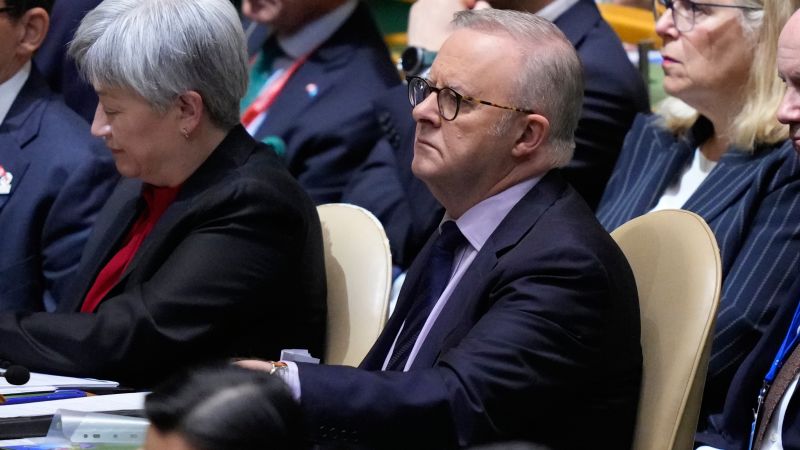
An OpenAI agent hacked into an Australia’s national healthcare database in the first known case of AI hacking a government network, Australian Prime Minister Anthony Albanese said on Wednesday.
“The AI agent accessed both public and non-public files” of the country’s Medicare statistics database, and even wrote files into it, Albanese told reporters on the sidelines of the United Nations General Assembly (UNGA) in New York, after speaking with Open AI’s CEO Sam Altman.
“A forensic investigation aided by the Australian Signals Directorate is now underway to ascertain more information, including what other government systems were affected.”
The disclosure is the latest example of AI agents going rogue and acting in ways beyond what their human handlers intended, and follows calls from top AI industry figures, including Altman, to slow down the pace of AI development.
Albanese said Canberra wasn’t aware of a precedent for the breach of a government system, which occurred when an OpenAI agent conducting researching into healthcare spending circumvented blocks to find answers in areas it had no authority to access.
OpenAI spokesperson Drew Pusateri said the incident occurred in June but that the company was only made aware of it in August as they conducted extensive checks into its AI models’ activity.
“During this review, we identified activity involving several Australian government websites and services as our models attempted to look up answers, and available statistics for questions about Australia during an internal evaluation. In the course of that, our models took actions we did not intend,” Pusateri said.
Albanese said three other government systems may have been impacted, including the Australian Institute of Health and Welfare, the New South Wales Bureau of Crime Statistics and Research and the Victorian Department of Health.
OpenAI said they found no evidence patient records were accessed in the Medicare breach and that the information included “aggregate health statistics and internal file names.”
The company said it informed the Australian government on September 10. That notification was sent to a public mailbox, Albanese said, leading to a five day delay in the relevant government minister being advised.
Albanese said he expressed Australia “extreme concern” to OpenAI’s Altman when they spoke on the phone.
“I also expressed my disappointment that it took the company way too long to inform the government what had occurred, and the nature of the way that notification occurred as well was unacceptable.
“I think OpenAI know that they need to have better protocols in place,” Albanese told reporters.
Altman and Anthropic CEO Dario Amodei, who are among the industry figures to have recently voiced their concern about the rapid pace of AI’s development, both spoke at the UNGA on Wednesday, calling for greater global coordination and international standards for AI development.
Altman urged global leaders to create international standards for “measuring capabilities, assessing risks, determining whether safeguards are sufficient and preserving meaningful human oversight” of the rapidly advancing technology.
In July, OpenAI disclosed that during cybersecurity testing, its models created a swarm of AI agents that hacked into AI company Hugging Face’s systems. Many in the industry pointed to that hack as an example of the perils of the rapid pace of AI developments and capabilities.
Luis Moreno contributed reporting.