
Unlock the Editor’s Digest for free
Roula Khalaf, Editor of the FT, selects her favourite stories in this weekly newsletter.
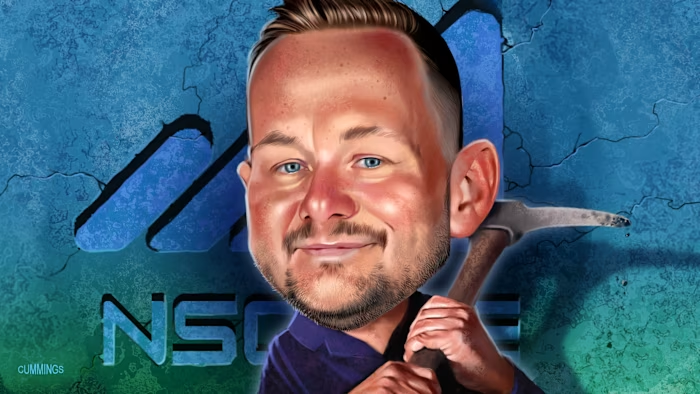
Ten years ago, Josh Payne was working in a coal mine in Australia. Today, the 32-year-old finds himself in line for a billion-dollar payday from selling the picks and shovels of the AI boom, as his data centre start-up Nscale prepares for a potential $35bn initial public offering.
The Australian entrepreneur’s rise has shocked former colleagues, who describe his progress as “incredible” given his lack of higher education or experience in finance. But Payne appears to have more than compensated for this through a network of powerful allies, wooed by his intensity and matter-of-fact manner.
Since launching two years ago, Nscale has secured backing from Nvidia chief Jensen Huang and former Meta executives Sheryl Sandberg and Sir Nick Clegg, helping the company to win multibillion-dollar contracts from Microsoft and Anthropic.
“I’ve never seen a start-up take off like that before,” Huang told Payne last year, as he commemorated his company’s £500mn backing with a signed bottle of Johnnie Walker Blue Label whisky. “There’s a rocket ship, but I think you’re on a starship.”
Born in the global coal-shipping capital of Newcastle, a rugby league town north of Sydney, Payne left school at 17 and spent several years working in construction jobs.
There, he says, he spent his free time reading books on entrepreneurship, going on to found a construction-staffing business in 2017 in his early twenties, before switching his efforts to renewable energy as managing director of PT Capital, a Sydney corporate advisory firm, in 2018.
Just one year later, his desire to catch the latest trend led him to found a bitcoin miner, Arkon Energy, and Battery Future Acquisition Corp, a blank-cheque group that unsuccessfully sought critical mineral deals.
Finally, he struck gold with Nscale, one of a string of rapidly growing but heavily indebted cloud-computing start-ups to emerge in the AI era. After moving to London, Payne began developing the company from within Arkon, which made a $102mn loss in its last year of trading. Nscale was spun out in May 2024 and has subsequently subsumed its parent, switching capacity from cryptocurrency mining to AI.
One person who knows the Australian speculated that his quiet demeanour was behind his appeal in Europe. “In the US, you have to be bold and loud; in Europe that doesn’t work as well.”
Payne’s low profile extends to his personal life. He has almost no public online presence — save for a few Nscale-related posts. Close aides claim they are largely in the dark about his interests.
Those who work with him talk instead about his ambition. Sandberg, who joined Nscale’s board in March, has said that Payne’s “visionary leadership” and “relentless desire for execution” remind her of Mark Zuckerberg.
Nscale has five active data centre sites and contracts for a further 12. But Payne’s dreams are even bigger. In June, he told Time magazine he wanted to create a “$1tn hyperscaler”.
Clegg, who was introduced to Payne by former IBM chief Sam Palmisano and was convinced to join Nscale’s board over a coffee near his home in London, praises him for identifying the opportunity in sovereign AI infrastructure from governments worried about being left behind. It is, he told the FT earlier this year, “one of the many reasons why I think Josh and his team have been so smart in understanding . . . where the puck is going.”
Nscale’s big break came through a $6.2bn deal with Microsoft in late 2025 to deploy thousands of Nvidia chips at a facility it runs in Norway. The deal propelled Payne’s fledgling company into the public eye, even before it had completed construction of its first self-developed facilities.
The speed of expansion has put strains on the company. Ahead of its New York IPO it has flagged “material weaknesses” in internal financial reporting controls due to a lack of appropriate systems and insufficient staffing, which the company warns it “may not fully remediate during 2026 and 2027”.
Yet Payne’s backers remain firm in their resolve that the young Australian will deliver. “He’s smart, he’s insightful, but he’s also really humble and down to earth . . . and when he makes a commitment, he goes out and executes it,” Nscale backer and Nokia boss Justin Hotard told the FT.
Payne is one of a new generation of Australian founders minted from Nvidia-backed investment in AI, a group that also includes Oliver Curtis and Tim Rosenfield at Firmus — set to launch what could be Australia’s largest IPO.
Yet it is the UK that has hailed Payne as one of its own. Last September, Sir Keir Starmer’s government lauded Nscale as part of plans to develop an AI Growth Zone centred around plans for a “Stargate UK” data centre site. This year, however, the project was put on indefinite hold.
That has shifted Nscale’s centre of gravity — and Payne’s attention — to the US. It has also highlighted the fragility of his business. Nscale has warned that Anthropic and Microsoft will be “significant customers” for the foreseeable future. The small print of its deal with the former — giving Anthropic sweeping rights to terminate the deal if Nscale fails to deliver on compute power — is a reminder that, despite Payne’s fortunes, real power still lies elsewhere in the AI nexus.
Additional reporting by Tim Bradshaw and Ryan McMorrow