
It’s the sort of question that Turkle, a psychologist and sociologist at MIT whose latest book is “Artificial Intimacy: Who We Become When We Talk to Machines,” has been fielding for decades. Recruited to the faculty at MIT in 1976, Turkle was one of the first to study how humans interact with the newfangled invention called computers. Since then, as founding director of the MIT Initiative on Technology and Self, she’s explored how a range of new tech — from robot pets to online avatars to social media — has changed us, the humans that engage with them.
Turkle is one of the first people who dared to question whether our engagement with this technology is actually good for us. Her books “Reclaiming Conversation: The Power of Talk in a Digital Age,” “Alone Together: Why We Expect More from Technology and Less from Each Other,” and “The Empathy Diaries: A Memoir” all expose how our digital world can dehumanize us. In “Artificial Intimacy,” Turkle’s message reaches a fever pitch: We are in “a state of emergency,” she writes.
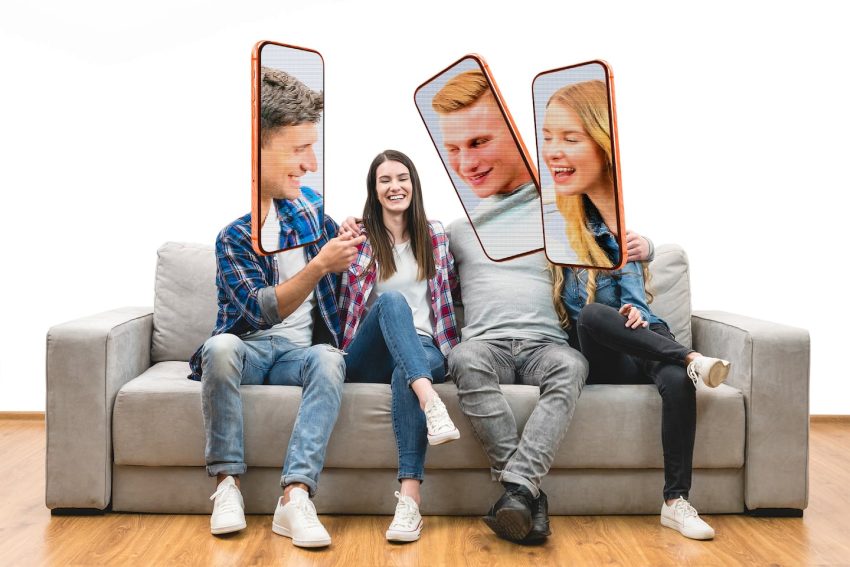
Human communication has fundamentally shifted, Turkle argues. Charting a history of digital innovation, she describes early communication as human-to-human. After that, it was human-to-human, enabled by machine — such as the phone or email. Today, the line of communication runs human-to-machine. We are, in other words, treating our machine counterparts as we would a fellow human — worthy of a relationship.
For the first time in history, she writes, the chatbot — which we engage with as we would a human — may pass a Turing test for empathy. But when chatbots generate a response that implies any kind of caring or concern toward the human it is addressing, she warns, it is just “pretend empathy.”
Some argue a bot’s empathy may be enough. For those who have no resources for therapy, for those who struggle with human connections — who doesn’t? — and for those in desperate circumstances, a fake therapist/wife/friend may offer comfort.
But pretend empathy, Turkle argues, is profoundly damaging. First, it is a trick: ChatGPT doesn’t (and, fundamentally, can’t) care whether you make up with your husband or jump off a bridge. Second, chatbots are programmed to keep us engaged; that’s why they soothe us and validate us and confirm our beliefs. But that’s not the sort of relationship we’re built for. We’re meant to encounter obstacles, friction, tension –– which leads us to learn more about ourselves and each other and to develop resilience. When our words and views are simply reinforced, we cannot develop the skills required for real human connection. And if we don’t use those skills, they atrophy.
Finally, as Turkle told me in a recent interview, pretend empathy “undermines something profound about our humanity”: It lowers the bar for what is acceptable in our human relationships — downgrading the whole idea of intimacy. By relying on chatbots for emotional support, “we’re accepting it as though that’s all we deserve,” she said.
Turkle recalled people “falling in love” with their computers back in the ‘70s. “The impulse to anthropomorphize has been there forever,” she said. “We’re hardwired for that.” But previously, objects have “resisted,” she said. “They always came back and said, ‘well, hold on, it’s a one-way street. You can love me, but I can’t love you back.’ Now we have something very different. Because it’s saying, ‘Oh, you love me? Well, you can talk to me about your marriage. If you’re having trouble with a guy, you know, I love you.’”
It’s “completing an arc of anthropomorphizing,” she said. We used to simply project, but now our machines are “coming back and saying, ‘I can actually deliver for you.’”
Chatbots are doing this, Turkle told me, via what she calls “the original sin” of using the first person — of using “I” in generated messages to us.
There is much to be learned, Turkle told me, from what she calls the “gateway drug to chatbots”: social media. “It softens us up for [the chatbots], because we get used to thinking, ‘I’m really depressed,’ or ‘I’m lonely … where’s my computer?’”
Looking to tech to solve the problem of loneliness is relatively new, she said. And now, “this technology actually says, ‘I’m going to answer back and be there for you.’ It takes where we were and exploits it to a new level.”
Tech is never a tool, Turkle insisted: “Anybody who tells you it’s just a way to share pictures of your grandchildren with everyone or a way to keep an online diary — they’re wrong. It’s selling you something, it’s shaping your views, it’s changing your fundamental ideas about how to relate.”
It makes sense why people in times of war, chaos, economic instability, and a real existential crisis would turn to an AI “companion.” We are yearning for safety, security, and understanding. A chatbot’s “pretend empathy” gives us the illusion that we are vulnerable, which may lead us to divulge deeply personal information. But true vulnerability involves risk — not knowing how the other person will react, whether you’ll be judged. And bypassing vulnerability — a requirement for human intimacy — is “both the problem with the thing” and why it’s so appealing, Turkle told me.
Instead of using tech to solve social problems, Turkle said we should turn to real human beings. We must get to the real root of the problem, she says: a lack of rich human connection.
“There needs to be a massive political … not even a backlash,” said Turkle. “A frontlash.”
“Keep it out of education,” she said of the chatbot. “Keep it out of psychotherapy. Because every place it goes, it says what the humans used to bring is not necessary anymore.”
The journalist who asked Turkle how a chatbot family could be harmful was echoing a question the psychologist has been hearing for years — from friends, associates, and fellow researchers (whom she called, it must be mentioned, some of the “smartest and nicest people in the world”). “I’m so besieged by all these colleagues,” she recounted, “saying, ‘look at this AI we built. It will sit with you and your child and have a conversation. It’s gonna be so much more empathetic.’”
This time, Turkle decided to turn the tables. “It was such a turning point for me,” she recalled. Instead of defending her position, Turkle asked the journalist: How is this model of artificial intimacy an improvement on human connection? On time spent with real people? Are we really content with the idea that we’ll all end up sitting around talking to AI friends and families? What does the world that we want to live in look like?
“My new line,” she said, “is, ‘What’s the end game?’”
Some say that it’s too early to know how chatbots will change things. That we need more time to see how this will unfold. Turkle has no patience for this mindset. We’ve been there before, she argued, and the results are clear. Nearly 20 years after the release of the iPhone, we’ve established links between teen phone addiction and depression, anxiety, and insomnia.
“We don’t need to build the bridge first to check if it’s going to fall down,” she said. “This bridge is going to fall down.”