
Tesla (TSLA) bull Dan Ives is doubling down on the idea that Tesla is an AI company, not an automaker.
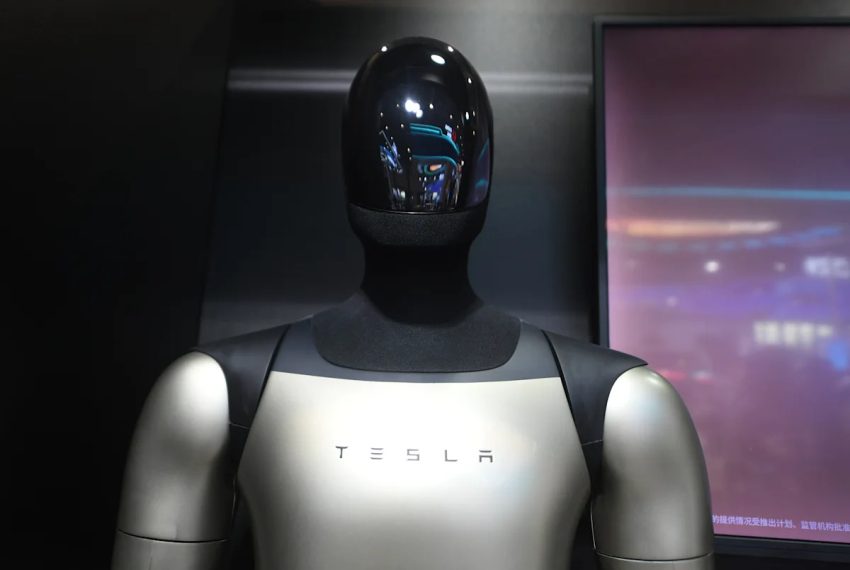
The longtime Wedbush analyst now at Yorkville Ives reiterated his Outperform rating and $500 price target on Tesla in a note to clients, arguing that autonomy, robotaxis, and Optimus humanoid robots will increasingly be the primary factors driving the company’s value.
“We view Tesla as one of the clearest ways to own physical AI in the public markets,” Ives wrote. Tesla stock was up over 2% on Friday.
382.70 +7.70 (+2.05%)
At close: 4:00:00 PM EDT
382.44 -0.26 (-0.07%)
From Ives’s viewpoint, Tesla has built under one roof what most AI and robotics efforts are still assembling from partners: a fleet of several million vehicles generating driving data, the AI models and in-house chips that learn from it, and the manufacturing scale to build the products.
“Investors valuing it primarily as an automaker are pricing a fleet rather than the platform being built on top of it,” he said.
Ives calls Full Self-Driving (FSD) the bridge between today’s car business and tomorrow’s autonomy business. The subscription is already lifting software revenue per vehicle, with an attach rate above 55% on new North American EV sales.
Tesla’s robotaxi service now operates in six US cities with paid miles approaching 2.5 million, and a 5,000-vehicle Nevada permit gives it a path to a much larger fleet. Cybercab, the purpose-built driverless vehicle with no steering wheel or pedals, has begun production and is carrying paying passengers in Austin.
Ives said the number to watch is the fleet count, “as unsupervised vehicles move from dozens toward thousands, autonomy moves from optionality to revenue.”

Ives uses a sum-of-the-parts valuation based on 2028 revenue estimates, which puts Tesla at roughly 12.2 times revenue vs. a peer median of about 5.3 times. By his math, Tesla’s existing businesses are worth about $165 per share if it’s valued as a car company. Ives assigns the remaining $335 to autonomy and Optimus.
That means around two-thirds of his Tesla price target focuses on businesses still in their early stages. Ives notes only 45 Cybercabs are authorized for driverless operation in Texas, and Tesla itself expects about 2,500 vehicles in Nevada in year one, half of what the permit allows. And Tesla’s second quarter update removed both the Cybertruck and Optimus from its 2026 volume production list.
Regulators are another issue that could impede growth. NHTSA issued a Special Order on Cybercab’s self-certification, and Tesla’s sworn response was due Sept. 30. No decision has been announced, but an adverse finding could confine Cybercab’s operational area.