
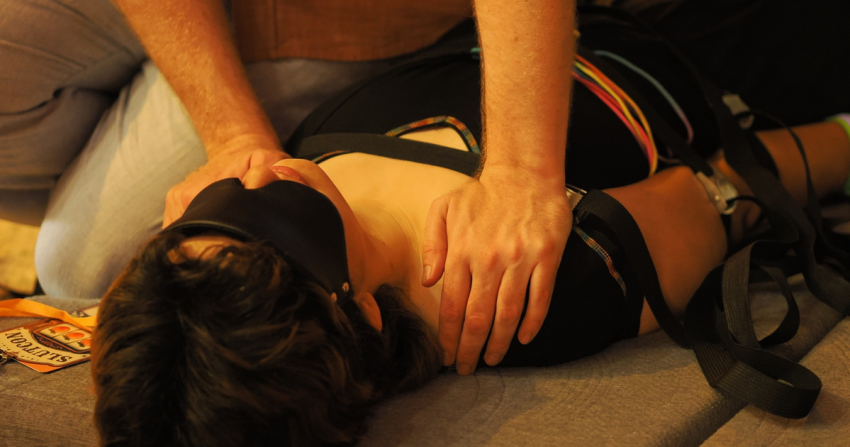
On a Sunday afternoon in late September, 10 men and two women sat in a workshop titled “So You’ve Been Called a Creep,” run by Gretta Duleba, a blond Google engineer turned relationship therapist turned AI alignment researcher from Berkeley.
The men fidgeted with buttons and wrung their hands. Most had never been called the C-word, but all worried that they might be. “It’s not an easy, kind word to throw around,” said one participant who asked to be identified as “Standard Deviant,” the name printed on his lanyard. “One wants to move kindly through the world,” he said, “and sometimes one falls short.”
The term “creepy” is “used as a weapon by those who feel violated,” noted Duleba; sometimes it’s merited, but often it’s not. The group was unsure about where the line between awkward and creepy lay. Some had seen hotter men get away with behavior they couldn’t and wondered if attractive men get more leeway. Yes, was the consensus.
For people who struggle to read others — a skill she called “attunement” — she suggested a take home exercise. Watch character-driven movies; pause during emotionally charged scenes. “What are the characters thinking and feeling?” she asked. “How do the actors demonstrate [this] through facial expressions and body language?”
This might seem like surprising homework, but the approach was typical SlutCon: open, vulnerable, faintly ridiculous, and somewhat actionable.

On its surface, SlutCon is a three-day crash course in flirting, consent, and interacting with potential romantic partners, designed primarily for awkward heterosexual men. Its tagline: Get practice. Get feedback. Get good.
The conference has exposed tensions around the overlap between the Bay Area’s sex-positive tech culture and the AI safety movement.
The second annual event was held at Lighthaven, a sprawling 30,000-square-foot campus in Berkeley, owned by a rationalist nonprofit.
The organizers included Aella, a sex researcher, sex worker, and AI safety advocate, and Chesed, cohost of “SlutStack,” a podcast about kink and poly Bay Area culture.

Despite the protected and anonymous bubble the event attempted to create for attendees, its existence stirred up controversy in real time online, with critics questioning whether it made the AI safety movement look kooky, was a front for prostitution or orgy recruitment, or could lead to the unwanted sexualization of women in professional tech spaces. This discourse led to three parallel SlutCons: the one paraded online, the one organizers believed they’d built, and the one experienced by attendees.
If the world is ending, like, this is a good way to spend the end of days.”
Chesed
Organizers did their best to keep the worlds separate. In the weeks before SlutCon, Chesed insisted she wanted the weekend to be free of AI dread. There would be no AI safety talks and no doomerism, she said. “The goal was for everyone to take three days to focus on the beautiful human experience of falling in love and having sex,” she said. “If the world is ending, like, this is a good way to spend the end of days.”

A total of 111 men and one woman paid between $3,000 and $18,000 to attend SlutCon. The fee included food but not lodging, with higher amounts granting access to more programming and additional feedback and instruction. A main draw were the 95 “flirt girls,” whose luminous green wristbands signaled that they were here to help attendees hone their skills in a low-stakes setting. The women did not pay to attend the event. The 59 of them who underwent a six-hour “flirt girl training,” which covered establishing boundaries and practicing rejection, received $500.
The premise was that for one weekend, norms would be suspended, with attendees granted a safe space to practice approaching women for flirting and to be open about their own kinks and preferences.
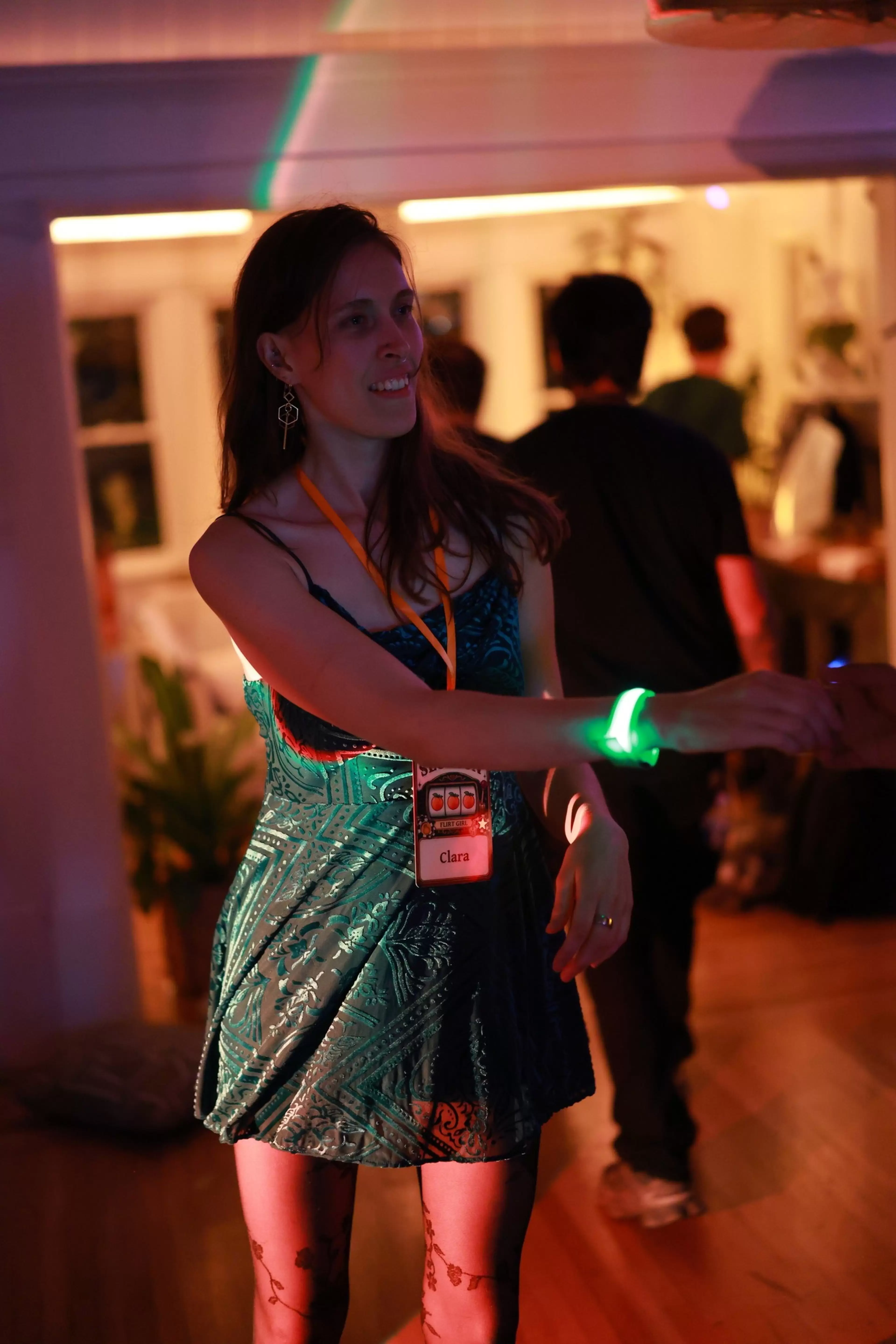
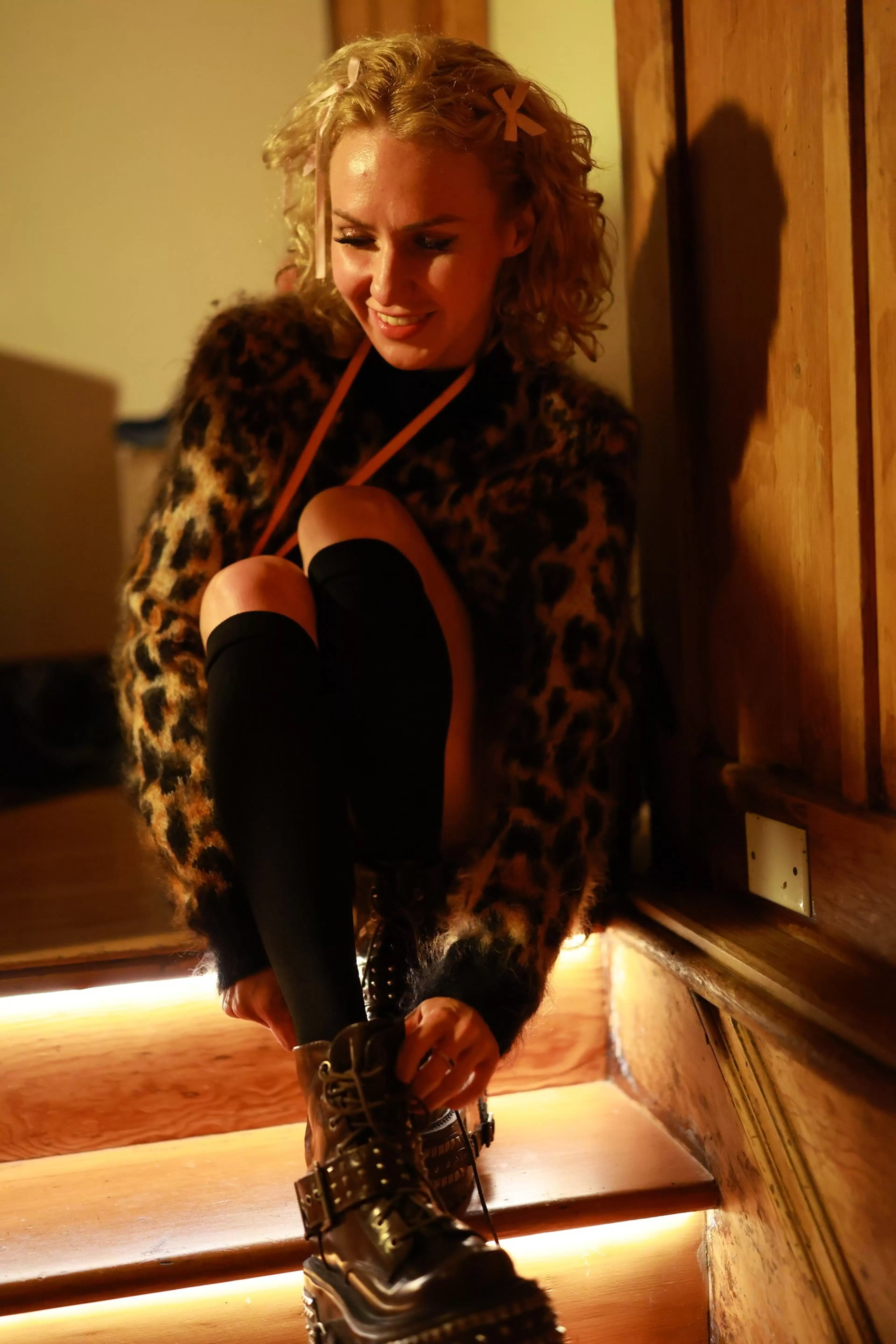
The rules around consent were explicit. A green wristband indicated that a woman was open to being approached but did not grant authority to kiss or touch her. Guest lanyards were to be worn at all times, no meant no, and you couldn’t ask a flirt girl for her contact details. There was no explicit sexual activity allowed in public, no loud noise outside after 10 p.m., and no flirting with people not wearing wristbands.
Consider the space a safe container to experiment, Aella said in the opening ceremony. It ended with a drill in which people paired up and practiced saying yes and no to various requests, escalating from “Can I shake your hand?” to “Can I have your bank details?” “The whole philosophy of this event is to ask and to be able to handle a no,” she said.
Men on a quest for confidence
The large number of workshops indicated a very modern dilemma: Men want to approach women but are unsure how. SlutCon applied a techie logic to the mysterious space of attraction: identify a problem, test a solution, and keep iterating.
When SlutCon started Friday afternoon, Lighthaven’s rooms and lawns were full of men and women mingling, preening, and sipping fizzy water and canned coffee. They lounged on low cream sofas, huddled around empty firepits, and wandered by the 10-person outdoor hot tub, which was slowly filling up.
The men spanned decades, from a 19-year-old Bieber lookalike to grizzled, divorced sixtysomethings. A beefy thirtysomething Canadian showed off photos of his son, who turned 1 that weekend, saying his wife told him to attend.
One man wore an N95 mask; another never removed his black latex gloves. The women’s outfits ranged from bodycon dresses, fishnets, and booty shorts to jeans and flannel shirts. Everyone wore a laminated lanyard with their preferred name and symbols indicating their status.
At a workshop titled “Confidence Engineering: Stop Trying to Make the Hot Girls Like You,” Aaron Kaufman, a prolific Substacker (opens in new tab), shared his slide deck and hard-won tips from the previous SlutCon. Women had rejected his advances, he said, and he’d been called needy and scolded for inappropriate dirty talk. But he’d also made friends and had hot sex.
He told the men to stop filling silences and to accept that they will be rejected. When someone shuts you down, he said, resist the urge to explain yourself and “just accept her feedback.” One man copied it into his Moleskine notebook; another typed into his Notes app. A third audience member picked his nose, examined his finger, and repeated the process.
“Confidence is fundamentally a lack, not a presence, of behavior,” Kaufman told the room.
On Saturday morning, around 22 men gathered in a carpeted room for the “Reading Women: Is She Into Me?” workshop.

Flirt girls demonstrated interest and disinterest on command. One, a sex worker who goes by Jean Blue on Substack — most attendees declined to use their real names — taught the room about “sticky eyes” (opens in new tab) — a party trick where you catch a man’s gaze, hold it, look away, and look back. Blue later wrote that the room was united by “a gnawing feeling of insufficiency, a longing to be better.”
“I’m good, very good, at having conversations with women,” said Glawk, a 33-year-old mechanical engineer from Canada who had a diamond ring on his lanyard, indicating that he was open to marriage. His issue was elevating interactions with women from friendly to flirty; by Day Three he’d identified his next steps.
“I need practice just pushing that gradient. I’ve had a lot more sex than I’ve [had] kisses,” he said. “Making out to me is kind of a big deal.”
The attendees were broadly more polished than last year’s. Many seemed charming, confident, well-spoken, and able to approach a woman without giving her the ick. They just didn’t know how to take it further, or how to read the cues that indicated they were allowed to.
“Now I just gotta work on my approach anxiety,” one said on X (opens in new tab).
Sex, with an undercurrent of doom
AI anxiety was hard to avoid in a building plastered in it. Posters advertising an AI safety conference were tacked to the walls. Books about X-risk sat on the shelves. A Canadian woman working as a flirt girl told me her book on AI consciousness is publishing next summer.
In the weeks leading up to the event, fears that tech might end humanity were spreading beyond the community and were being taken seriously on an international stage. The day SlutCon opened, the White House announced that Chinese President Xi Jinping (opens in new tab) and President Donald Trump had agreed to a direct line for AI incidents, though Trump has dismissed concerns about the technology. What had once seemed niche now had a president-size spotlight on it.
One attendee, an AI doomer, said he wants kids, even if they have a mere six to eight years to live. “It’s very top of mind for the people who come to these sorts of things,” said Amina Green, a 30-year-old flirt girl and AI safety content creator from San Francisco with Bambi-like lashes and a penchant for fitted dresses.


| Source: Courtesy Misha Gurevich
In one evening social activity called “The Game,” the more experienced men flirted with women onstage, while those in the audience analyzed their technique.
A blond woman in a floor-length silky red dress crossed her legs and informed the man flirting with her that she’d just accepted a job in AI. “Yes, I’ve joined the enemy,” she told the audience, drawing a chorus of “ooohhhss” and hisses.
“You can punish me later,” she said.
It was possible SlutCon might lose some volunteers if a new AI safety crisis occurred, Chesed admitted, as many of the helpers were in that space.
Valley of the flirts
For the women, a group that included a handful of off-duty sex workers, it was more complicated. They were the main attraction but also were free to take what they wanted from the weekend.
Many of the women had flown in to attend, hailing from Massachusetts, Colorado, Canada, and the U.K. There was a pregnant flirt girl and a flirt girl who pumped milk between sessions. Most were slim, conventionally attractive, and roughly in their 20s and 30s. For many, the $500 stipend barely covered their trip.
Their reasons for coming were different from those of the men who’d paid thousands for their company. Some were Aella-stans and love her unfiltered posts about sex and data. Some wanted to give unfiltered feedback in a safe space. Some were just curious. Many ended up finding more fulfillment connecting with one another than with the men who had paid to be there.
Camille, a 24-year-old from Calgary, came to learn about herself more than about men. Autistic and a virgin, she wanted to learn what made her uncomfortable, if she might like to move to the Bay, and whether any of the kinks appealed to her. She recorded her findings in a Notion table.
“I’m actually a lot less freaky than I thought.”
Camille
“I’m actually a lot less freaky than I thought,” she said. “Having no experience [has] been more beneficial than if I had some bad experiences [and] came here with a lot of baggage.”
The apex of the women’s world was the Flirtee Flophouse, a female-only lounge that contained mirrors, low sofas, beanbags, and canned drinks. Cassie, a 29-year-old Bostonian who’d attended the year before, said she fixed women’s hair there and gave one fashion tape to mend her dress.
“Oh God, I’m supposed to be here for the men, but actually, I’m enjoying my interactions with the women the most,” said Vortex, a 33-year-old AI executive from the Midwest with endless legs.
She went on her own journey over the course of three days. Vortex is bisexual and said shame left over from her homophobic college roommate had kept her from fully exploring relationships with women. She turned her own struggles with approaching women into a teaching tool for the men. “It actually helps them,” she said. She kissed two women and two men over the course of the weekend.
By Sunday night, the organizers had added a women-only “sapphic mingle” to the conference agenda, billed as “girl flirting.” This was due to flirt-girl demand, Chesed shared, noting that it’s “obviously not the main focus … [but] who are we to deny the flirt girls opportunities to flirt with each other?”

| Source: Courtesy Misha Gurevich
It was an unexpected twist. The men had paid for real-life practice, but the women were not required to provide it. The paid flirtees were asked to “flirt” for 10 hours, but it wasn’t enforced. They were encouraged to attend workshops, take breaks, and make friends, or simply remove their green wristband, which many did.
“To a first approximation there were zero women,” Aaron Bergman, (opens in new tab) 26, an AI technical consultant from Berkeley, complained in a post on X. “About 95% of the time there appeared to be zero women who were not already getting chatted up … or were otherwise busy in such a way that they definitely did not want to be distracted.” The event was OK, he conceded, “just not worth anything like $3k + 20 hours for me personally.”
Sex cult allegations disturb the peace
Online, SlutCon’s AI safety overlap was becoming everybody’s business, and harder to ignore. The more lurid allegations presented a PR dilemma that organizers struggled to address.
“To say you’re not in a sex cult makes it sound like you’re in a sex cult,” said Chesed.
“To say you’re not in a sex cult makes it sound like you’re in a sex cult,” said Chesed.
Chesed
The venue is run by Lightcone Infrastructure, a rationalist nonprofit, and plays host to many AI safety conferences. Scott Alexander, a leading figure in the rationalist community who is behind the Astral Codex Ten blog, wrote (opens in new tab) that SlutCon’s association with AI safety “really does damage the credibility of a movement with 60-year-old voters in Ohio.” He values sexual freedom and expression, he said, but there might be real political costs.
Liv Boeree, a poker champion and AI safety advocate, was incensed. “That’s the stupidest PR decision I’ve ever heard of, what [the] hell are they thinking,” she wrote on X (opens in new tab). But Oliver Habryka, (opens in new tab) CEO of Lightcone, was unmoved. “We rent the space to whoever pays us money,” he said on X (opens in new tab). “We have hosted capability company events here that I think are much more morally dubious than SlutCon. If you want to cancel us for something, I recommend those ones.”
An X user named Literally Chad criticized SlutCon as a “consensual rape orgy” and an “autistic sex party” for the AI safety crowd. His viral post (opens in new tab)received 1.4 million impressions and fed claims that the event was a prostitution front or a recruitment vehicle for rape-roleplay orgies, with Aella positioned as the conniving mastermind.
Justine Moore, a partner at Andreessen Horowitz, joined the fray. (opens in new tab) “I think the vast majority of the sessions here are not aimed at helping men learn how to merely ‘flirt’ with women, as the event is portrayed,” she posted.
“No CNC orgy took place, and no orgy took place.”
Aella
Aella, who has publicly discussed organizing consensual nonconsent, or CNC, orgies, denied this. “No CNC orgy took place, and no orgy took place,” she said.
The pile-on got so feral that Eliezer Yudkowsky (opens in new tab), coauthor of “If Anyone Builds It, Everyone Dies” and a darling of the AI safety movement, outed himself as an attendee to defend it. “’FlirtCon’ is the more accurate name IMO,” he said on X; the goal was “flirtatious conversations with women who will not thereby have a terribly unpleasant time of it that they did not sign up for.”
I attended all three days. I went to a workshop on how to run an orgy — spreadsheets, and STI tests were key — but I did not witness an orgy, which is defined as five or more people. I was not present for every interaction.
One rationalist Substacker named Clara, who does not publish her last name, wrote (opens in new tab) about sexual expectations spilling over into other gatherings. “It is actually, in some environments, inappropriate to flirt,” she said, noting that SlutCon risked making that line blurrier.

| Source: Courtesy Misha Gurevich
Another writer argued that SlutCon might have real (opens in new tab) “consequences” for women, making them feel uncomfortable attending professional events. On X, some said friends had been propositioned at other Lighthaven events, because, “the null hypothesis is that women in that space are sex workers or adjacent (opens in new tab).” Defenders on X argued that the problem was predatory men and that “attacking (opens in new tab) SlutCon is giving these men cover.” But Talia, a flirt girl, called that “cognitive dissonance, (opens in new tab)” noting that some “guys are so autistic, they can’t tell if you respond warmly or coldly to their advances.”
There was some truth to this, which is where things got messy. Some women told me they’ve felt unsafe at AI events, and the space isn’t always friendly to women. And yes, there might be social currency being a cool AI researcher who goes to SlutCon and even career perks with possible downstream effects (opens in new tab), they said.
An allegation of a sexual assault (opens in new tab)at the first SlutCon, during the open-to-the-public party, surfaced. The woman said she hadn’t reported it at the time, fearing she’d be “laughed at” by the hosts due to their association with CNC. The organizers acknowledged and apologized for the incident, increased security and made all events attendees-only this year.
Don’t try this at the bar
On Sunday night, under a bright and full harvest moon, the men at SlutCon donned tuxedos and three-piece suits for a James Bond-themed closing party. By then, many attendees were aware of the discourse unfolding online.
“There’s something gauche about the whole thing. This whole thing is kind of trashy … [though] it has a wholesome energy at times,” said Standard Deviant (opens in new tab), reflecting on the event and its critics. Regardless, social media was not the place to litigate it, he concluded.
“It has a wholesome energy at times.”
Standard Deviant
He sympathized with some of the dissent. “It’s important for women to feel secure in their position,” he said, acknowledging the male dominance of Bay Area tech circles. But he also found the event joyful and wants it to continue. “I don’t know how to square the two.”
There will be a third SlutCon, Chesed confirmed, though it may have a rebrand. The name, while enjoyably provocative, made it sound like “a convention for being slutty, which it is not.” But it also filtered for the men she wanted there. “I have mad respect for the guys who say, yeah, that does sound really dumb, but I’m gonna do it anyway, because I care about developing the skill.”
At the closing ceremony, the organizers, clad in floor-length sheer dresses, warned the men not to take the weekend too literally when they reentered the real world.
The women at SlutCon had opted in, Aella reminded the men. In “the real world, you can’t just assume these women have signed up for you to experiment on them,” she said. “Use your normal reasoning about how this works … informed by your better understanding of female psychology.”
“Some of the stuff you learned here won’t translate directly — don’t try it at the bar.”