
Hello, and welcome to TechScape. I’m Blake Montgomery, US tech editor at the Guardian, writing to you while moving laundry from the washer to the dryer, wishing a robot could do the task for me. Today in tech, we’re talking about workers and AI.
Workers under surveillance
Employees across the globe are increasingly finding themselves minutely monitored in their workplaces, with tiny changes in their behaviors resulting in negative performance evaluations.
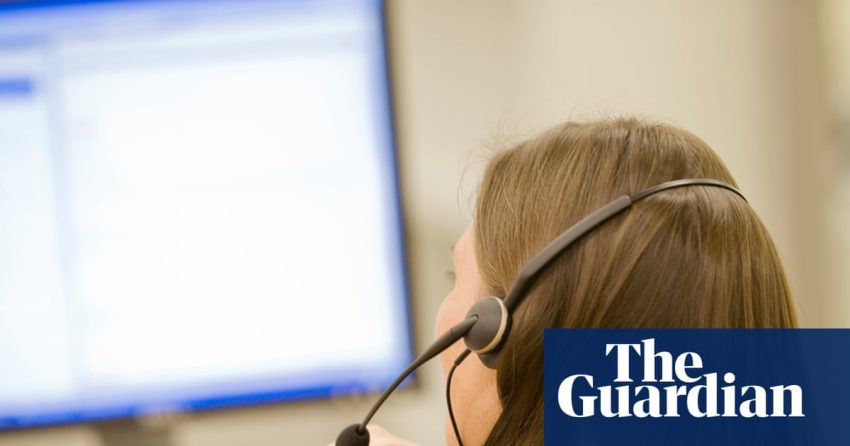
The latest example of workers under surveillance and bristling at it comes from Co-op, which operates supermarkets, undertakers, insurance and legal services companies in the UK. The company implemented an automated listening technology that rates every phone call some of them make to customers.
In a system described as “oppressive and dystopian” by a whistleblower, Co-op Legal Services is using AI models to record, analyze and award a percentage score for interactions between agents and customers seeking advice about probate, wills and estates.
“You are being watched,” said a Co-op worker who spoke to the Guardian on condition of anonymity.
Read more: ‘Dystopian’: Co-op becomes latest firm to put staff under AI surveillance
The Co-op said it did not recognize the criticism and said its probate advisers were highly engaged.
Resentment of workers’ treatment is already translating into policy, a break from the sluggishness of most technology regulations. Across the Atlantic and the continental United States, California governor Gavin Newsom signed laws into effect last week that prohibit certain types of workplace surveillance.
California’s laws aim to target workplace surveillance measures like heat maps that track employees’ movements, including how long they spend in the bathroom, or having their emotional states monitored. Amazon warehouse workers have previously complained about being timed on their bathroom breaks, for example. And at Kaiser Permanente, a California hospital chain, nurses have said automated systems rated their tone of voice in patient interactions.
Read more: California’s new laws target workers’ biggest fear of AI taking their jobs
***
Tell us: Are you being watched at work?
Tell us: have you been monitored or assessed by AI at work?
Silicon Valley on screen
Artificial review – Luca Guadagnino takes on OpenAI in muddled tech satire
The Social Reckoning review – Aaron Sorkin’s jittery sequel with all-new evil puppet Zuckerberg
Whom does AI benefit?
Two stories recently published in the Guardian’s Reworked series pose the question: who is AI enriching?
The first story details how the AI boom is leaving women out of the single largest engine of growth in the US economy. One visible example: Donald Trump’s all-male summit of AI leaders last week: not a single woman in sight as the president preached the power of “superintelligence”.
“We’re talking about who captures a major new source of economic mobility,” said Felicia Newhouse, founder of AI Powered Women, an organization that promotes women’s participation and leadership in AI. “The deepest risk is that a participation gap becomes a power gap.”
Read more: The AI industry is booming. Women are getting left behind
after newsletter promotion
Across AI-related occupations, the median pay of men is $45,000 higher than that of women, partly due to the types of jobs men and women are more likely to have, according to research by LinkedIn: men are still typically hired for higher-paying roles in the AI industry.
When pitching investors, one female co-founder of an AI startup said she has found through trial and error that she and her male co-founder are more likely to get an investment if he does the pitching.
Another story in the series examines how dire working conditions can become under the pressures of AI and automation. Refugees in Kenya are completing tasks for foreign technology companies under bizarre and opaque conditions.
The stories of desperate remote data workers used to highlight the low pay and horrid content they were exposed to. Today, workers who spoke to the Guardian say they aren’t even sure they will be paid, as their compensation is tied to a so-called “reward” system that decides whether they receive payment based on the quality of their work. Many of the workers called the system unfair but also said with dismay that they had few, if any, other options.
Read more: ‘Someone else will do it for less’: refugees in Kenya are powering tech for dwindling pay
The workers in Kenya also expressed a desperation to earn any money at these jobs before AI could carry out the rote tasks they were assigned.
Contrast these stories of unequal benefit with Sam Altman’s recent remarks on a podcast: “We believe that the world should accept some bad things happening for the benefits of this technology.”
Altman was referring to the consequences of AI like the hack of Hugging Face or the attempted creation of bioweapons by would-be terrorists. Bad, to be sure, but lacking the moral outrage of human consequences.
The wider TechScape
Microsoft suspended from applying for green cards for H-1B workers, JD Vance says
OpenAI’s release of mathematical findings draws concerns from experts
Margaret Hamilton, trailblazer whose software powered Apollo 11 moon landing, dies aged 90