
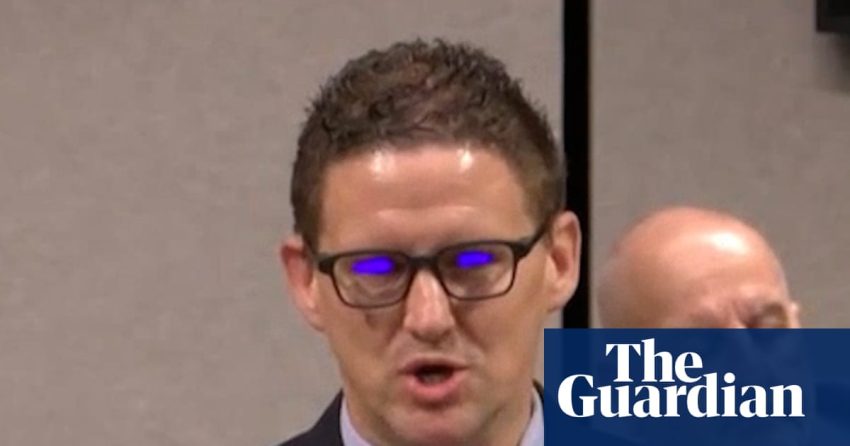
It was a flowing speech packed full of precise statistics – but Jason O’Connell, a Reform UK Senedd member, was not quite the gifted orator he had first appeared. The periodic flashing in his spectacles seemed to give the game away as he spoke for five minutes in the Senedd chamber without a glance at his notes.
“Cardiff reviewed 192 roads, following 933 requests, and only four routes have returned to 30mph,” he said as he led the party’s charge to abolish 20mph traffic zones. “£38.3m wasted to implement this policy and up to £8.9bn in an act of economic self-harm.”
It was likely no feat of memory – rather, the Reform member for Pontypridd Cynon Merthyr was suspected of using smart glasses that turned his lenses into tiny teleprompters.
In the days afterwards, Welsh assembly members said the issue of smart glasses – popularised by Mark Zuckerberg’s Meta – needed to be dealt with at pace, with explicit guidance on their use developed.
There was no suggestion that O’Connell’s glasses were recording. But it has prompted a fresh debate about the increasingly popular technology, with the House of Commons facing calls to ban smart glasses at Westminster.
The Liberal Democrats wrote to Lindsay Hoyle, the speaker, on Wednesday, urging him to act amid the “increasing use of smart glasses” on the parliamentary estate. They warned that with Christmas coming, even more people could start using the AI-enabled devices in 2027.
The technology has myriad implications. Anna Sabine, the Liberal Democrat spokesperson for culture, media and sport, said smart glasses could lead to debates becoming increasingly “managed”.
“How much is the quality of what an MP is saying actually down to what they’re getting through the AI glasses?” she said. “It’s a really interesting question.”
She said she had not yet identified anyone wearing smart glasses in parliament but added: “This is the problem: I wouldn’t necessarily know.” A law would help to keep the estate and the work MPs did “private and secure”.
Sabine added: “Smart glasses can record video and take photographs discreetly … creating a particular risk to the existing rules on the parliamentary estate [limiting recording and photography].
“I am regularly in meetings with documents or talking about important, private matters on behalf of my constituents. I am sure you will agree that the details of such cases should never be at risk of being shared because someone is filming or taking pictures discreetly.
“Because smart glasses look like ordinary glasses, and increasingly their recording indicator lights can be covered or disabled, filming could easily go unnoticed by security teams, putting private information at risk.”
after newsletter promotion
A spokesperson for the UK parliament said it was reviewing its policy on the use of camera-equipped smart glasses, as well as other forms of wearable technology, on the parliamentary estate.
The senior deputy speaker of the House of Lords told parliament last month that the review “is considering the implications of these emerging technologies and whether additional guidance is required”.
He added: “This work will bring together expertise from those responsible for filming and photography policy, physical and information security, privacy and data protection compliance and accessibility and reasonable-adjustment requirements, ensuring that any future approach appropriately balances security, privacy, operational needs and accessibility considerations.”
O’Connell has been contacted for comment. On Sunday he posted a picture on X of himself wearing a large pair of comedy pink glasses for a breast cancer charity, with the message: “Trialling some new glasses for the chamber this week. Apparently my last ones caused quite a stir.”