
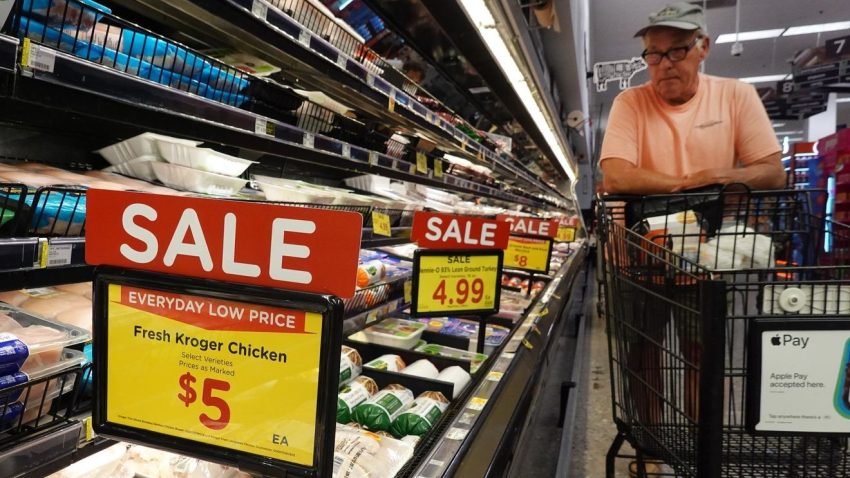
SEATTLE — A new law will change how grocery stores in Seattle use shoppers’ personal information when setting prices at the register.
Seattle Mayor Katie Wilson is expected to sign the Fair and Transparent Pricing ordinance on Monday, following a 7-2 approval from the Seattle City Council.
KOMO News has been following this story, which has sparked debate among shoppers, union leaders, advocacy groups and the grocery industry.
PREVIOUS COVERAGE
The city describes the ordinance as the first of its kind in the nation and says it aims to protect customers from stores using data such as race, gender, employment status or online activity to determine what they pay.
Councilmember Alexis Mercedes Rinck, who worked on the measure with Wilson, said it is “intended to put some guardrails on what big businesses can do with our personal information. At a time when SNAP reductions have rocked our community and people have less to spend on food, this is an important step we can take to prevent AI-assisted price gouging and ensure fair discounts for everyone.”
Under the rules, large grocers—defined as chains with at least 20 locations worldwide—will not be allowed to base prices on personal details, browsing history, social media activity, or chatbot conversations. Stores must clearly post prices available to all customers. The rules apply to both in-person and online grocery retailers, as well as delivery services. Traditional discounts, open coupons and savings for groups like seniors and veterans will still be allowed.
The move was partly inspired by consumer investigations in 2025 that found significant price differences for the same groceries. One report described how several people using an app to shop at the same Safeway in South Seattle at the same time saw up to a 23% gap between the lowest and highest price for the same item.
Union leaders, including those from UFCW 3000 representing grocery workers in Washington, said the legislation’s goal is to stop so-called “surveillance pricing” and keep prices posted accurately and consistently for everyone.
“Super important because we’re getting squeezed left and right. Gas is up, rents are up, prices for everything is up for a lot of reasons,” said Rich Smith, a spokesperson for the union.
Still, major retailers have pushed back, saying the law could have negative side effects for shoppers.
Amanda Dalton, president and CEO of Northwest Grocery Retail Association, said, “The only people that lose if we get this wrong, are consumers, and we’ve made that really clear to the Mayors team,” Amanda Dalton, president and CEO of Northwest Grocery Retail Association, said. “That also means that Seattle families are going to be the first to bear the risk if this untested policy results in fewer coupons, discounts and personal savings. Folks are very concerned that loyalty programs could go away just in the city of Seattle.”
Safeway officials said it does not use shopper information to set higher prices but uses customer data for digital coupons, member prices and other savings offers.
“We strongly disagree with the Seattle City Council’s decision to pass this legislation. Safeway does not engage in the pricing practices this ordinance claims to address, yet the measure will restrict personalized deals that help customers save on groceries,” a Safeway spokesperson said. “Seattle consumers should not have to lose valuable savings because of a policy that fails to distinguish between raising prices and using customer information to deliver discounts.”
Others, like Councilmember Maritza Rivera, who voted against the measure, said she supports banning retailers from raising prices using personal data but fears the policy could discourage stores from offering discounts.
For most Seattle shoppers, coupon and loyalty programs are a big draw.
“They are usually pretty useful because if I see something that is on sale, according to the store, I pick it up over another brand,” said Rachel Markoya, a frequent grocery shopper.
Union leaders say they plan to push for similar regulations at the state level.
“We hope the passage of this legislation helps us all return to the work of feeding our communities instead of feeding Wall Street’s greed,” said UFCW 3000 Secretary-Treasurer Sean Embly.
Mayor Wilson is expected to make the ordinance official on Monday.
The new law will not impact small grocers, convenience stores, or farmers’ markets.