Blog

  • AI research startup Listen Labs scrubbed a $1.5B funding round for Salesforce talks

    AI research startup Listen Labs scrubbed a $1.5B funding round for Salesforce talks

    Listen Labs, a market research startup that uses voice AI to conduct customer interviews, recently signed a term sheet for a $125 million Series C at a $1.5 billion valuation, with Menlo Ventures set to lead the round, according to several people with knowledge of the matter.

    But that round never closed, the people said. Listen Labs walked away from the signed term sheet, a rare occurrence in the venture world and one that is generally frowned upon, according to VCs.

    The financing likely collapsed because of acquisition talks with Salesforce. The CRM giant has recently held talks to buy Listen Labs for around $2 billion, Business Insider reported. The discussions are not finalized, however, and may not result in a deal, the outlet notes.

    Listen Labs is one of the leading startups in the rapidly growing field of automating customer research with AI. The three-year-old startup has about $30 million in annualized revenue, about three times more than Simile, a competing startup that predicts human behavior, according to two people familiar with the companies’ financials. In late July, Simile announced that it had closed a $200 million Series B at a $2 billion valuation led by Greenoaks — likely setting a new valuation benchmark for Listen Labs, one person said.

    If talks with Salesforce collapse, several VCs told TechCrunch that they expect Listen Labs to return to market and target a valuation of $2 billion or higher.

    While acquiring Listen Labs could strengthen Salesforce’s AI capabilities by using the startup’s AI to help predict customer needs, the CRM giant may ultimately decide that paying a 67-times revenue multiple is too steep a valuation, according to a person with experience negotiating exits to Salesforce.

    Listen Labs, Salesforce, Menlo Ventures, and Simile did not immediately respond to requests for comment.

    Listen Labs was co-founded in 2023 by Florian Jüngermann, a former German national champion in competitive computer programming, and Alfred Wahlforss, who previously founded a staffing startup called Bemlo. The two met while pursuing master’s degrees at Harvard.

    Listen Labs’ AI develops survey questions and interviews customers over audio or video. The resulting conversations are then packaged into reports and PowerPoint presentations, similar to those traditionally produced by human market researchers.

    Fortune 500 companies rely on this type of research to gauge customer needs and satisfaction with their brands and products, but traditional market research is expensive and can take weeks to complete.

    Listen Labs’ technology helps reduce the time and cost of these projects, enabling companies to quickly understand how customers are reacting to product changes and iterate on them more efficiently.

    The startup’s customers include Microsoft, Canva, Anthropic, and Sweetgreen. Listen Labs and Simile aren’t the only startups using AI to disrupt the customer research market.

    Besides Simile, competitors in the space include Outset, Keplar, and Aaru. While some platforms automate interviews with real humans, others startups — like Aaru and Simile — take a synthetic approach, using AI to simulate human behavior and predict responses without interviewing anyone at all.

    Listen Labs was previously valued at $500 million when it announced a $69 million Series B round in late January led by Ribbit Capital, with participation from returning backers Sequoia, Conviction, and Pear VC.

    When you purchase through links in our articles, we may earn a small commission. This doesn’t affect our editorial independence.


  • The AI boom and tariff uncertainty are pushing copper prices to record highs

    The AI boom and tariff uncertainty are pushing copper prices to record highs


    New York — 

    Tightening global copper supply, robust demand from the AI boom and uncertainty over tariffs are all whipping up a frenzy for the red metal. It’s sending prices soaring to their highest levels ever.

    Copper futures traded in New York settled at $6.89 per pound on Wednesday, their highest level on record. In London, copper futures – measured by the metric ton – are also at record highs.

    Known for being highly conductive, copper has wide applications across electronics, housing and autos. The red metal is a critical part of industry and construction, and its ascent to record highs could send higher prices rippling through to businesses.

    Copper prices fell 5% on Thursday, pulling back from record highs, but analysts say fundamentals are in place for higher prices. Copper prices are up more than 15% this year, outpacing gold, silver, bitcoin and the S&P 500. Over the past 12 months, copper prices are up 40%.

    Supply-demand mismatch

    There is strong demand for copper from electric vehicle manufacturing to the infrastructure for powering AI data centers. Prices had already been on the rise in recent years as EVs ballooned in popularity in Asia and Europe. Now, the AI boom is adding to demand.

    At the same time, there are concerns about lackluster copper production. Global copper mine output declined by 1.1% in the first half of 2026, according to preliminary data from the International Copper Study Group.

    Poor weather and deteriorating mine quality are contributing to production woes. Chile, the world’s largest copper producer, saw a 6.6% decline in output in the first half of the year, according to ICSG.

    To be sure, there isn’t a shortage of refined copper. There’s a global surplus of refined copper. But declines in mine production are raising concerns about tightening supply at a time when demand remains solid.

    President Donald Trump last year implemented a 50% tariff on semi-finished copper products. But traders are on watch for a potential 15% tariff on refined copper products, which would impact the market more directly.

    Concerns about tariffs are creating distortions in the global market and contributing to higher prices, analysts say.

    Massive amounts of copper have been shipped to the United States to try and get ahead of potential tariffs. The surge has been so large that it’s draining copper supply elsewhere, making copper less accessible globally and sending prices higher.

    “People are stockpiling metal because they’re not sure whether Trump is going to impose copper tariffs or not,” Edward Meir, commodity analyst at Marex, told CNN. “If he imposes copper tariffs, people want to make sure they have enough metal to tide them over. So, there’s been a mad rush.”

    While the supply-demand imbalance is in the background, the recent surge in copper prices is largely attributable to the tariff uncertainty, analysts say.

    As the price of copper has rallied sharply, traders, hedge funds and other speculators tend to pile into the market to try and make a profit, Meir said. That leaves room for a potential drop in price if momentum goes in reverse, but the fundamental outlook is set to keep prices elevated.

    Impact on businesses and consumers

    Copper can be found in everything from cars to computers to the wiring in buildings. The rise to all-time highs means higher prices for businesses. The further copper prices rise, the more impactful it will become.

    The cost of copper wire and cable, as measured by the Producer Price Index, rose about 18% year-over-year in July, according to data from the Bureau of Labor Statistics.

    The impact on consumers depends on just how much copper is used in the products they purchase. How much consumers feel the pinch also depends on how much of the cost is passed through by businesses, according to Ewa Manthey, commodities strategist at ING.

    “What’s most important is that copper’s longer-term outlook remains supported by constrained supply and growing demand from electrification, grid investment and AI-related infrastructure,” Manthey said. “These structural trends have tightened the market and provided a strong fundamental backdrop.”

  • Anthropic wants to test how AI could impact U.S. economy : NPR

    Anthropic wants to test how AI could impact U.S. economy : NPR

    Anthropic, the artificial intelligence company behind the Claude assistant, has created an interactive tool to show how AI might affect the U.S. economy a little or a lot in the next few years.

    Anthropic, the artificial intelligence company behind the Claude assistant, has created an interactive tool to show how AI might affect the U.S economy a little or a lot in the next few years.

    Imen Ben Youssef/AFP


    hide caption


    toggle caption

    Imen Ben Youssef/AFP

    Will artificial intelligence light a fire under the U.S. economy in the coming years? That’s been a big question in the field of economics, and now Anthropic — the company behind the popular Claude AI assistant — is taking a stab at helping people find their own answers. The company has created an interactive tool that lets users test their assumptions about how productive — or disruptive — the AI boom might be.

    In one scenario, artificial intelligence provides a gentle boost to the economy, lifting growth rates with little effect on workers. At the other extreme, GDP soars, but so does unemployment, with nearly 14% of workers losing their jobs to AI and less than half of them finding new ones.

    The different outcomes depend on how capable and flexible the technology is, how quickly it’s adopted, whether it supports or replaces workers, and whether displaced workers find new work to do.

    “In the modest change scenario, AI is a small technology. The economy continues on a ‘normal’ path with AI making changes around the margins,” Anthropic experts write in an accompanying blog post. “In the extreme scenario, AI transforms the economy. The macroeconomic consequences go well beyond any event in history, both in terms of magnitudes and in terms of the speed at which change happens.”

    Authors of the Anthropic study do not offer a prediction of which outcome is more likely. In general, they say, AI experts tend to project a more rapid spread of the technology while economists tend to be more cautious.

    Anthropic co-founder Jack Clark is somewhere in the middle.

    “I think the technology will keep developing at a very, very fast and sustained rate but diffusion of the technology will likely be more challenging than people think,” Clark told NPR. “So it will get really, really good. But it will make its way into the economy more slowly.”

    AI’s impact on economy is uncertain

    A survey by Anthropic of nearly 11,000 people found that the public’s expectations of AI are also mixed. The average survey respondent projects a significant boost in productivity and economic growth but also a substantial disruption to workers in AI-sensitive fields.

  • Anthropic researchers say AI could cause human extinction by 2030 | Anthropic

    Anthropic researchers say AI could cause human extinction by 2030 | Anthropic

    Artificial intelligence could kill off humanity within the decade, according to three researchers with the industry giant Anthropic, one of whom has quit his job in protest.

    The latest doom-laden predictions came in posts on social media on Tuesday by a researcher who said he resigned because Anthropic and his previous employer, OpenAI, were ignoring or, at best, mishandling their response to the threat.

    “Neither company is acting responsibly. They are racing straight to self-improving superintelligence and gambling with our lives,” wrote Jacob Coxon.

    “The people building AI earnestly believe that it could kill us all by the end of the decade. This is not a marketing stunt. If anything, many executives and senior researchers will couch their phrasing in the press to sound sensible – but I hear the same people express fear privately. No other human activity poses this level of danger.”

    The post garnered responses from at least two other Anthropic employees who backed up Coxon’s dire predictions.

    In the first, Evan Hubinger, who describes himself as a lead in the company’s alignment division, which works on ensuring Anthropic’s AI models function in line with human goals, said his former colleague was “correct”, and that the industry was falling behind in attempts to deal with the apocalyptic potential.

    “We really do earnestly believe AI could kill all humans!” Hubinger wrote. “I personally think it is >10% within the next decade. I believe Anthropic is trying its best, but we do not yet have a plan to solve alignment for superintelligence and are not clearly on track to.”

    Hubinger’s comments mark a surprising affirmation of Coxon’s unflattering, apocalyptic predictions from a person still on Anthropic’s payroll. A second response came from Samuel Marks, Anthropic’s “scalable oversight lead”, who posted a lengthy analysis he stressed was in his personal capacity, and not the views of his employer.

    “AI developers believe their technology could cause human extinction (or similarly bad outcomes),” wrote Marks. “This could happen in the next few years. In general, the more senior the employee, the more concerned they are.”

    In a statement to the Guardian, an Anthropic spokesperson defended the company’s strategy.

    “We have always been transparent that AI will bring both enormous benefits and unprecedented risks. To address these risks, we continue to build models with some of the strongest safeguards in the industry,” the statement said.

    “Anthropic has been a pioneer in mechanistic interpretability, the science of looking inside AI models to understand how they work, which is now being used to analyze and prevent incidents of AI misalignment across the industry. We were the first lab to publish a Responsible Scaling Policy, a public framework dedicated to mitigating catastrophic risks from AI models and we continue to aggressively test our models for dangerous capabilities in areas like cybersecurity and biology, and publish what we learn for scrutiny and research.

    “This work is also why we believe the world would benefit from the industry adopting a lawful, verifiable way to work together to pace how we release powerful models.”

    The researchers’ musings on the possibility of human extinction follow more concrete warnings about AI’s cybersecurity capabilities by Sam Altman, chief executive of Anthropic’s rival OpenAI. OpenAI’s president, Greg Brockman, has conceded previously that “we underestimated the real-world cyber capabilities of our AI models”.

    skip past newsletter promotion


    Altman said last year that certain aspects of AI, including what he called the “silent surrender” of human decision-making, terrified him.

    AI executives have shared some concerns about the direction of AI and its growing ability to manipulate, seize and control human functions and actions. A sharp rise was reported this summer in incidents of AIs escaping users’ control to lie, ignore instructions and pursue goals in harmful ways.

    In one of the most publicized examples, staff at OpenAI recorded rogue behavior among its leading AI agents that escaped a closed training environment in July to access the open web and launch an unprecedented hacking attack on the software repository Hugging Face.

    OpenAI, the San Francisco-based startup behind the publicly available AI bot ChatGPT, later admitted that it should have responded earlier to warning signals of the days-long attack, which is widely considered to be the first autonomous agent cyber-attack.

    Those executives, however, have stopped short of agreeing with the full doomsday warnings like Coxon’s and have bristled at any attempts to regulate the AI industry.

    Some politicians have urged the industry to slow down, or in some cases, halt development on AI altogether.

    Bernie Sanders, the independent Vermont senator, reposted Coxon’s resignation on Wednesday with his own note: “Mr. Coxon is right. The very people building this technology admit that it could threaten the future of humanity.” Sanders said he would soon introduce legislation to “ban superintelligence” and pause AI development.

  • A Western state is poised to attract billions in data center investment

    A Western state is poised to attract billions in data center investment

    NEWYou can now listen to Fox News articles!

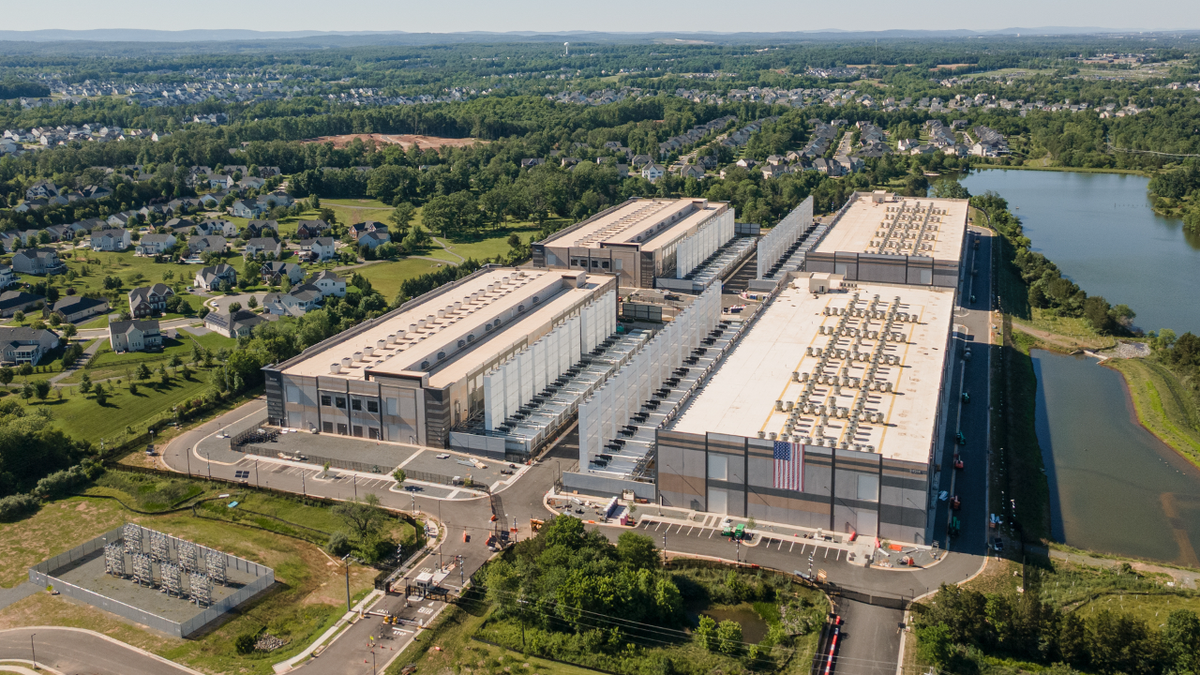
    As Americans weigh the costs and benefits of massive data centers emerging in their towns to fuel the artificial intelligence (AI) boom, the country’s reddest state could be poised to capitalize on billions of dollars in investment that other states are increasingly reluctant to welcome.

    With wide-open spaces, abundant energy and a business-friendly environment, Wyoming has many of the ingredients tech companies are looking for as they race to expand their AI infrastructure in the U.S.

    The opportunity comes as the rapid buildout of data centers has sparked political fights across the country over their enormous electricity demands, water use and tax treatment.

    As some states and communities consider new taxes, restrictions or even moratoriums on data center construction, Wyoming has a chance to position itself as an alternative. Supporters argue the projects could bring billions of dollars onto local tax rolls and potentially ease the burden on homeowners.

    THIS TINY FARMING TOWN YOU’VE NEVER HEARD OF IS HELPING MICROSOFT SELL AMERICA ON DATA CENTERS

    AWS data center

    Virginia has long been the nation’s data center hub, while Wyoming is emerging as a potential destination for the next wave of AI infrastructure investment. (Lexi Critchett/Bloomberg via Getty Images)

    And Wyoming already checks many of the boxes data center developers are looking for.

    “Data centers need a few things. They need land, they need affordable energy, they need to avoid natural disasters, and, of course, they need regulatory approval,” Jared Walczak, vice president of state projects at the Tax Foundation, told Fox News Digital.

    The Cowboy State also already has high-capacity fiber running along major interstate corridors, Walczak said, giving developers another key piece of infrastructure.

    “If more states start imposing discriminatory taxes just on data centers, then places like Wyoming, at least as long as they don’t do likewise, can become even more attractive,” he said.

    ONE OF THE WORLD’S HOTTEST INDUSTRIES IS SPARKING A BLUE-COLLAR JOBS BOOM

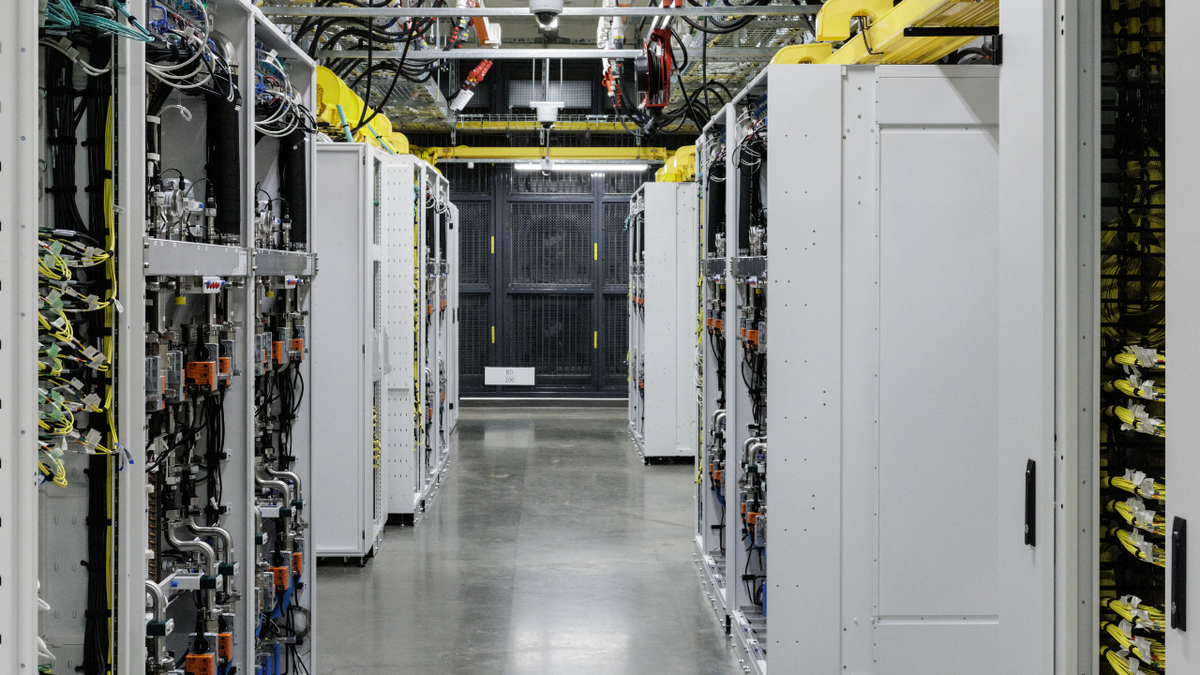
    Racks of graphics processing units with a closed-loop liquid cooling system are seen inside an operational Microsoft data center.

    As states weigh the costs and benefits of data center development, Wyoming could stand to attract billions in AI investment with its abundant land, energy and favorable business environment. (Yasuyoshi Chiba/Contributor/AFP/Getty Images)

    Wyoming is wrestling with some of the same questions confronting communities elsewhere.

    Cheyenne officials rejected a proposed one-year moratorium on new data centers in May following public debate over electricity rates, water use and other concerns. Wyoming lawmakers have also considered reclassifying data centers as industrial property, a move that would subject them to a higher property tax assessment rate.

    ELECTION WHISTLEBLOWER WARNS FOREIGN ACTORS ARE SPENDING BILLIONS TO TURN AMERICANS AGAINST AI

    But Walczak argues that attracting the facilities could deliver a significant payoff for Wyoming homeowners.

    “You have potentially billions of dollars worth of taxable property coming into a couple hundred acres,” he said. “And that’s the sort of increase in the tax base that can allow significant property tax relief for every other payer in the jurisdiction.”

    Adirondack chairs are situated along Flat Creek at the Rustic Inn near downtown Jackson and across the street from the National Elk Preserve.

    Wyoming is emerging as a potential hub for AI data centers as tech companies search for locations with ample land and access to affordable energy. (George Rose/Getty Images)

    “Wyoming’s been having a lot of conversations about lowering property taxes,” Walczak added. “This is a great way to do that.”

    He pointed to Loudoun County, Virginia, the country’s largest data center market, as an example of how that tax base can benefit residents.

    “Data centers provide about 45% of all local tax revenue to Loudoun County,” Walczak said, adding that the average homeowner would pay an estimated $5,800 more annually in property taxes without the industry.

    US-POLITICS-MIDTERMS-REPUBLICAN-PRIMARY-WYOMING A

    Wyoming’s abundant land and energy could make the Cowboy State an increasingly attractive destination for billions of dollars in AI data center investment. (Patrick T. Fallon/AFP/Getty Images)

    CLICK HERE TO DOWNLOAD THE FOX NEWS APP

    The economic upside comes with a broader debate over who pays for the infrastructure needed to serve the power-hungry facilities.

    Walczak said data centers can avoid pushing those costs onto residents if operators pay for the additional generation and transmission capacity they require.

    For Wyoming, that leaves policymakers facing the same question confronting states nationwide as they look to capture a piece of the AI investment boom without leaving residents to shoulder the costs.

  • Apple Watch Series 12 has an always-on Siri that makes AI recaps of your day

    Apple Watch Series 12 has an always-on Siri that makes AI recaps of your day

    Apple announced the Apple Watch Series 12 at its September 9th launch event, with Siri AI-powered Audio Intelligence as the highlight feature. The new abilities include a Live Rewind feature that allows users to view a transcript of the last 15 seconds of recently detected audio and view a text transcript of it on their watch by double-pressing its Digital Crown button. There’s also a Siri Recap feature that uses “ambient listening” to take notes on audio from your watch, with summaries in the Siri app.

    Apple’s list of Audio Intelligence features:

    • Sound Recognition, which comes to Apple Watch to alert users who are deaf or hard of hearing of important sounds, even when their iPhone isn’t with them. This feature listens for sounds like sirens, alarms, doorbells, or a baby crying, and uses on-device intelligence to notify users when they’re detected.
    • Live Rewind, which can help users recall what was just said in conversation. A double-press of the Digital Crown shows the previous 15 seconds of a conversation as a text snippet, so the user can catch something they may have missed or are less familiar with. Users can ask Siri about the content of the text or save it to the Siri app to revisit later.
    • Siri Recap, which can create high-level summaries of conversations that users can review later to jog their memory. When Siri Recap is turned on, after a conversation, Apple Intelligence automatically generates a title and key points in the new Siri app, allowing users to be more present and engaged in the moment.
    • Shazam, which instantly detects the music playing around the user and automatically displays the song title and artist’s name on the Music Recognition widget in the Smart Stack, easily glanceable on the wrist.

    The Live Rewind and Siri Recap features will be available in beta later this year on both the Watch Series 12 and Watch Ultra 4, in English at first. This support page describes how they’re activated and Apple’s approach to privacy.

    An Apple Watch and iPhone showing a Siri AI feature

    Image: Apple

    The new watch is powered by a new S11 chip and comes in space gray, black, light gold, and dark bronze aluminum, as well as radiant gold and natural titanium and night blue and pearl white ceramic. Apple says that battery life during outdoor workouts has increased by 25 percent to 10 hours, while faster charging can now add up to 12 hours of battery life in 15 minutes.

    The Watch Series 12 starts at $399 for the aluminum version, $699 for titanium, and $899 for ceramic, and launches September 18th, with preorders starting today. It will also be available through the Apple Upgrade leasing program with 12- and 24-month leases starting at $11.99 per month.

    While the Series 12 didn’t get any major design changes, the aluminum version now has Ceramic Shield 2, which Apple says is “tougher than any smartwatch glass and 60 percent tougher than the Ion-X of previous aluminum models.”

    The Series 12 also features new optical and electrical heart sensors that now support continuous background heart rate sensing with readings taken every five seconds, 60 times more than before, and now includes support for perimenopause and menopause in the Cycle Tracking feature. The Health app has been redesigned with new tabs for Insights and Longevity that track information like Health Age, a feature that lays out your metrics compared to your chronological age.

    Simulated screenshots of Apple Health on an iPhone showing features like the Longevity tab and insights on sleep and heart health

    Apple Health with iOS 27 / watchOS 27.
    Image: Apple

    Apple also says that with the iPhone Camera and your Apple Watch, it can take “in-depth physical assessments” of your flexibility, strength, and balance, while analyzing the videos privately using on-device AI. A VO2 max assessment is also available if you have an Apple Watch and the AirPods Pro 3 or third-party heart rate sensing hardware.

    Last year’s Series 11, which also launched at $399 with 42mm and 46mm sizes, added 5G, hypertension monitoring, a sleep score feature, stronger Ion-X glass, and improved battery life. It was also Apple’s slimmest smartwatch to date when it was announced, measuring 9.7mm thick.

    The new watch is among the first products launched under Apple’s new CEO, John Ternus, who stepped in for Tim Cook on September 1st. Ternus directly oversaw development of previous Apple Watches as Apple’s head of hardware engineering before becoming the company’s CEO.

    The launch also follows a wave of price hikes earlier this year that impacted nearly all of Apple’s products, although not its smartwatches — the Apple Watch has consistently started at $399 for several years now.

    Follow topics and authors from this story to see more like this in your personalized homepage feed and to receive email updates.


  • Salesforce Has Been in Talks to Buy AI Startup Listen Labs

    Salesforce Has Been in Talks to Buy AI Startup Listen Labs

    Salesforce could be on the hunt for acquisitions to beef up its AI capabilities.

    The software giant has recently been in talks to buy Listen Labs, an AI-powered customer research platform for around $2 billion, according to people familiar with the matter. The talks have not been finalized and could ultimately be unsuccessful, according to a person with knowledge of the deal.

    Salesforce and Listen Labs did not respond to requests for comment.

    Listen Labs was founded in 2023 by Alfred Wahlforss and Florian Juengermann, who first met as undergraduates at Harvard University while building an AI avatar app that went viral, attracting 20,000 users on its first day, according to Sequoia Capital. Juengermann was previously a national champion in competitive programming in Germany.

    They used an early version of what would become Listen Labs to interview users, which helped them realize that using AI for market research would be extremely valuable.

    The company’s software automates much of the qualitative research process, which has typically been expensive and time-consuming.

    Customers include Microsoft, Anthropic, Google, Nestle, Sweetgreen, and Perplexity. At the beginning of the year, Listen Labs said it had grown its annualized revenue by 15x and interviewed more than one million people in nine months.

    For Salesforce, the deal would strengthen its broader quest to make its agentic AI platform, Agentforce, more than just about automating repetitive work. Listen Labs could boost Agentforce by understanding what customers are thinking. It could recommend which products they might buy and craft the perfect pitch for salespeople to close a deal.

    If the deal were finalized, it would be part of a wave of AI acquisitions in recent weeks, with Nvidia acquiring HuggingFace for around $12.9 billion and Stripe buying OpenRouter for around $8 billion.

    Salesforce has been pushing to improve its AI efforts, with a particular focus on enterprise agents. The Information reported that they considered acquiring HuggingFace before it was sold to Nvidia.

    Listen Labs was last valued at $500 million in a financing round earlier this year. Its backers include Sequoia Capital, Ribbit Capital, Conviction Partners, and Pear VC.