Skip to Main Content
Blog
-
Muse, The Band, Lost Its Social Media Handles To Muse, Meta’s New AI Agent
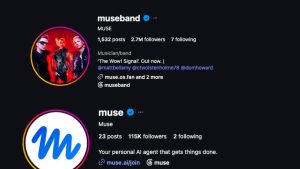
Muse, Meta’s newly-released AI agent, is now using social media handles once controlled by Muse, the English rock band. The exact circumstances surrounding how the accounts changed hands are unclear, but it has once again raised questions about Meta and other large platforms’ ability to commandeer usernames when it suits them.
Muse, the band, which trademarked its name in 1999, according to its wiki, has used the @muse moniker on Instagram and on X for years. But earlier this summer fans noticed the band’s Instagram username seemed to change to @museband. The change happened in July, according to The Independent, though Reddit users seem to have spotted a change in early June.
In any case, by the time Meta officially unveiled Muse, the AI agent, on Tuesday, the social media company was using the @Muse handle for its new agent. Likewise, the band once used the @Muse handle on X, but is now going by @museband on that platform as well. It’s not clear when that changeover happened, but it seems to have caused some crossed wires as Mark Zuckerberg’s initial posts about Muse the agent apparently tagged the band’s account, as New York Times reporter Mike Issac pointed out. And early posts from other Meta execs also inexplicably tagged the band, which Issac said was a “bug.”
best bug in twitter history pic.twitter.com/0VORftYfPn
— rat king 🐀 (@MikeIsaac) September 8, 2026
While details around the changes haven’t been made public, some fans have expressed disappointment with the band’s name being used for an AI feature. As the Independent notes, Muse has written songs that are “heavily inspired by fears and anxieties surrounding technology and how it might be used for social oppression.”
Meta didn’t immediately respond to requests for comment and neither did representatives for the band. But this is not the first time an Instagram handle has changed hands around the time that Meta made a major announcement.
The company secured the @Meta Instagram handle, which had been used by an independent motorcycle magazine of the same name, shortly after it announced it was changing the company’s name from Facebook to Meta in 2021. The magazine never publicly commented on just how that name change came about, but its editor-in-chief wrote at the time that it felt like a “punch in the gut” to see a “corporate Goliath” take on the identity it had used since 2014. The magazine later changed its name.
Likewise, when Meta launched Threads in 2023, it didn’t control the @threads handle on Instagram. The account was instead used by a small fashion retailer called American Threads. But a month later, Meta suddenly gained control of the account.
Meta has said little about how such name changes play out. In 2021, the company told me that it hadn’t made any legal threats to the motorcycle magazine but didn’t answer questions about whether it had contacted or paid the publisher. “We allow people to change their usernames on Instagram,” a spokesperson told me at the time.
Officially, Meta doesn’t allow people to buy, sell or trade Instagram usernames, though sought after handles are known to trade hands, sometimes through shady channels. People have also lost desirable handles on X in seemingly unofficial ways. The person who controlled @X before Elon Musk took over the company was told in an email in 2023 that he was losing the username, though he says he was offered merch in return. That same year, the person who had used the @music handle since 2007 had his username suddenly changed so that it could be used as an official X account. More recently, X opened a “handle marketplace” for people to officially buy inactive usernames.
Have a tip for Karissa? Reach out at karissa.bell [at] engadget.com or message securely on Signal at karissabe.50.
-

Indian-Origin Couple Donates $20 Million For US College To Be Named After Them
Washington:
An Indian-origin engineer couple donated USD 20 million to the University of North Texas to set up a college of artificial intelligence and advanced analytics. The college will be named after them.
The university announced that the new college will be named Anuradha and Vikas Sinha College of Artificial Intelligence and Advanced Analytics and will create new opportunities for students and faculty.
“Vikas and Anu’s commitment will create new opportunities for our students and faculty to build, study and apply these technologies while advancing central priorities of our Look North: UNT 2030 strategic plan – reshaping how we prepare students for a changing labour market, accelerating interdisciplinary research and innovation, and creating enduring value for North Texas and the state,” said UNT President Harrison Keller.
About College
The college will be organised around the Division of Applied Intelligence and Informatics, focused on building and deploying intelligent systems, and the Division of Information and Learning Applications, focused on how information and intelligent systems operate within human and institutional contexts.
It will serve as an academic and research hub focused on artificial intelligence, intelligent systems and data analytics.
The college will bring together expertise in areas including AI, cybersecurity, data science, advanced analytics, health informatics, information science, library science and learning technologies.
This donation will establish six permanent endowments supporting college leadership, student scholarships, endowed professorships, entrepreneurship and incubation, advanced research and emerging technologies.
“For us, this gift is about paying that opportunity forward and recognising that immigrants don’t simply participate in the American dream – they help build it,” Vikas Sinha, Vice President, Broadcom, said.
“Education has opened doors for us throughout our lives, and we want to hold those doors open for others,” Sinha added.
The college also will house the Applied Artificial Intelligence and Data Science Institute, which will connect AI and analytics research and education across UNT and create opportunities for interdisciplinary research, shared infrastructure, external research funding and industry partnerships.
About Anuradha And Vikas
Vikas and Anuradha came to the United States from India to continue their education after each earning a bachelor’s degree in civil engineering from Sri Venkateswara University, Uttar Pradesh.
They both earned graduate degrees from Florida Atlantic University, with Vikas going on to Northwestern University before earning his PhD from UNT in 2023.
In 2024, the Sinhas gave a gift establishing the Anuradha and Vikas Sinha Department of Data Science, along with endowments supporting scholarships, faculty, research and special initiatives.
A year later, they made another major gift, creating the Sinha Innovation Lab for Data Science.
The gift will advance UNT’s goals around student success, research and innovation while helping prepare graduates for a workforce increasingly shaped by AI and data.
-
Can you spot all the clues that prove this AI ‘photo’ isn’t real?
AI imagery and video still gets called out for some glaring errors. We recently saw a video of New York with two Empire State Buildings used to suggest that Hollywood should be quaking, while many small eateries and restaurants apparently don’t realise that AI-generated menu items look revoltingly unappetising.
But AI image generators have been getting progressively better at replicating photorealism, and it’s not always so easy to tell that an image is fake, leading to fears about how easily AI can be to spread lies online.
Take the image in the post on X below. There are lots of things wrong with the image. But can you spot them?
Latest Videos FromCreative Bloq
Heading to @BBC . A full day with 40 colleagues from BBC Verify, asking the important questions. Such as: is this photo real?Usually not. That’s rather the point.Can you figure out why this picture is not real without using a detector ? #osint pic.twitter.com/4fsXzlkjKkSeptember 9, 2026
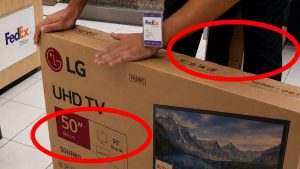
At first glance the image above looks like a photo of a mundane everyday scene at a courier officer, which appears to be handling shipment of a 50in TV. There’s even a bit of motion blur on one of the person’s hands.
“Can you figure out why this picture is not real without using a detector?” was the challenge laid down by AI researcher Henk van Ess. Take a moment to see how many clues you can spot.
Lovely challenge! 1. Text of tag not aligned properly 2. Odd shadows underneath left hand 3. Strange ‘third leg’/ shadow pic.twitter.com/LEsaci2XIESeptember 9, 2026
Those commenting have noticed many anomalies in the image. Firstly, the TV’s measurements. AI image generators might now be able to handle text, but it seems they’re not too hot doing conversions between metric and imperial because 50 inches are not the same as 144cm.
Moreover, judging by its relative size compared to the floor tiles and the person in the image, the box wouldn’t be large enough to hold a 50in TV (and less a 144cm one). The person also appears to have a third leg, and there are some strange shadows under their left hand.
Looking more closely, there are some perspective errors too. There’s something pretty funky going on with the of tiling on the floor in the background. And on the box itself, the edges of the AirPlay/Home labels don’t follow the same vanishing point as the cardboard they’re supposedly printed on – another sign of AI image generation (or some bad Photoshop).
Someone also finds it suspect that this kind of box would be printed with spot colour and CMYK. It’s even more suspicious that there’s no brand logo on the image of the TV.
And speaking of logos, graphic design nerds like me will also notice that the ‘X’ of FedEx should be touching the ‘E’ to form the famous hidden arrow in the logo.
Henk, the original poster, wrote the people-research chapter of the Verification Handbook for Investigative Reporting and teaches workshops on verification and AI-assisted research. He also created the Image Whisperer tool, which is designed to help identify AI images.
-
Apple’s AI strategy took center stage at its iPhone Duo event
Apple (AAPL) introduced its most anticipated and ambitious iPhone yet during a keynote at its headquarters on Wednesday: the iPhone Duo. But the event was just as much a showcase for the company’s AI capabilities.
Apple has been criticized for being slow to adopt generative artificial intelligence, while rivals like Samsung (005930.KS) have integrated the technology into their own devices and apps. But the company shot back during the Duo launch, presenting a slew of AI-powered capabilities for its iPhone, Apple Watch, and AirPod lines.
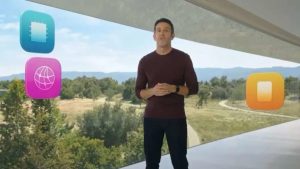
CEO John Ternus primarily focused on AI in his opening remarks, referring to the iPhone as an intelligent personal hub for users that “sits at the center of an amazing ecosystem of intelligent features and experiences that work seamlessly across the products you use every day.”
That includes the company’s generative AI-enhanced version of Siri called Siri AI. The improved personal assistant, which will launch in beta with iOS 27 on Sept. 14, is designed to pull information from across your apps when you need it.

Apple debuts its iPhone Duo. REUTERS/Carlos Barría · Reuters / REUTERS Users can, for instance, ask Siri AI questions like “What was that game Michael told me about,” and the assistant will search across your texts and emails to grab the information. Siri AI can also take advantage of your iPhone’s camera to tell you more about the world around you and serve up “broad world knowledge.”
The Apple Watch gets a lift from Apple Intelligence via Apple’s redesigned Health app. According to the company, users can use their watch to take regular readings across categories, including their heart rate, sleep patterns, and workouts, and get personalized insights about their broader health.
A new Longevity tab provides a Health Age that indicates whether users’ health readings are above or below their chronological age. An Insights tab, meanwhile, provides updates about your heart, sleep, vitals, and readiness ratings throughout the day.
The new AirPods 5 also get in on the AI action via Live Translation and the ability to chat with Siri AI hands-free.
Apple didn’t just show off AI on the products it announced at the show; the company also provided demonstrations following the keynote of how its latest Mac mini and Mac Studio desktops fit into its AI strategy.
A foldable iPhone Duo and an Apple Watch on display during Apple’s event at the Steve Jobs Theater in Cupertino, California, U.S. September 9, 2026. REUTERS/Carlos Barria · REUTERS / REUTERS In one example, the company demonstrated how four Mac Studios can be linked to run 1 trillion-parameter AI models. In another demo, Apple ran two separate billion-parameter models on the Mac mini.
Both desktops are wildly popular among AI developers for their ease of use and ability to run models remotely without a display.
-
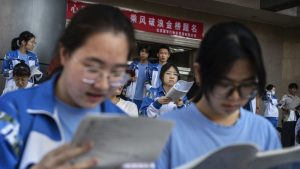
Asian teens race ahead of US peers for reading, science and math in global rankings
High-school students across Asia are pulling ahead of their Western peers, an annual global assessment indicates, as artificial intelligence spurs a worldwide race for talent and reshapes how young people learn.
In a troubling trend, reading, science and math performance among 15-year-olds has continued a decline globally across the board, according to the 2025 Programme for International Student Assessment released this week by the Organisation for Economic Co-operation and Development.
But among last year’s top performers were students in the Chinese cities of Beijing and Shanghai, Chinese provinces Jiangsu and Zhejiang, and the city-state of Singapore. Japan and South Korea were also in the Asia-dominated top 10 across all three subjects, along with the semi-autonomous Chinese city of Macao, and the self-governing democracy of Taiwan.
Meanwhile, secondary students in the US saw their reading scores fall close to 25-year lows, lagging more starkly behind their counterparts in China, which have long held a lead in the exams known for short as PISA – at least in the four major Chinese jurisdictions that submitted test scores.
The exam results come amid an intensifying rivalry between the US and China to outpace the other in technological advancement and direct more funding toward innovation. China has surpassed the US in published scientific reports as well as research spending, on which both nations exceeded $1 trillion in 2024.
However, the growing adoption of AI could significantly impact secondary education, the PISA report warned.
“Most troubling is the decline in the very skills that matter most in the AI age: evaluating information, making connections across multiple sources, and thinking critically about what we read,” Andreas Schleicher, OECD director for education and skills, wrote in the report. “In a world increasingly flooded with information, our students are less likely to think deeply and separate signal from noise.”

China’s data for the PISA tests is not without critics – in part because the test only includes students from the provinces of Shanghai, Beijing, Jiangsu and Zhejiang, some of the country’s wealthiest eastern coastal areas. Nonetheless, the testing has shown continued drop in US scores over the last decade, that have alarmed many educationalists.
As technology has progressed, student performance has become less linked with national or family wealth, the latest report said. While it’s difficult to determine the exact correlation between the rise of digital tools and test performance, the study identified one challenge as higher digital distraction in the classroom.
Among students from China, Japan and South Korea, fewer than 10% reported that their peers were distracted by digital devices during science lessons, compared with the global average of 28%. As one example of how educators might balance digital tools, the report said Singapore used technology in its classrooms but also emphasized reading comprehension early on.
The proportion of “hasty readers,” or students who rushed through their texts and gave incorrect answers, nearly doubled between 2018 and 2025, the report said. As the average performance among OECD countries in science, reading and math has reached record lows, that could have broader economic implications among the world’s biggest nations.
The 2025 report cited a Stanford University study that performance meeting a basic level aptitude in PISA among all 15-year-old Americans could add over $40 trillion to the US economy over their working lives. However, the percentage of OECD students below that baseline performance increased last year to 20% from 16% in 2022.
-
Apple unveils foldable iPhone Duo and AI features under new CEO John Ternus
Cult of Mac editor and publisher Leander Kahney recaps Apple’s 2026 launch event that featured the company’s first-ever foldable iPhone.
Apple on Wednesday unveiled a highly anticipated foldable version of the iPhone along with other consumer tech devices embedded with artificial intelligence in the first major product event under the leadership of new CEO John Ternus.
Wednesday’s event marked the first major product launch since Ternus stepped into the top job at Apple after former CEO Tim Cook stepped down at the end of August after 15 years leading the company.
Ternus has worked at Apple since 2001, primarily in its product design and hardware engineering teams, and brings deep knowledge of key products like the Mac, iPad, iPhone, Apple Watch and AirPods to the role.
The two Apple veterans joked about the transition during the event, with Cook appearing in a video about how to start the presentation that ended with a closeup of the former CEO saying, “Not me. That’s your guy,” and pointing back to Ternus.
APPLE UNVEILS FIRST FOLDABLE IPHONE, IPHONE 18 PRO LINEUP, NEW WATCHES AT ANNUAL LAUNCH EVENT
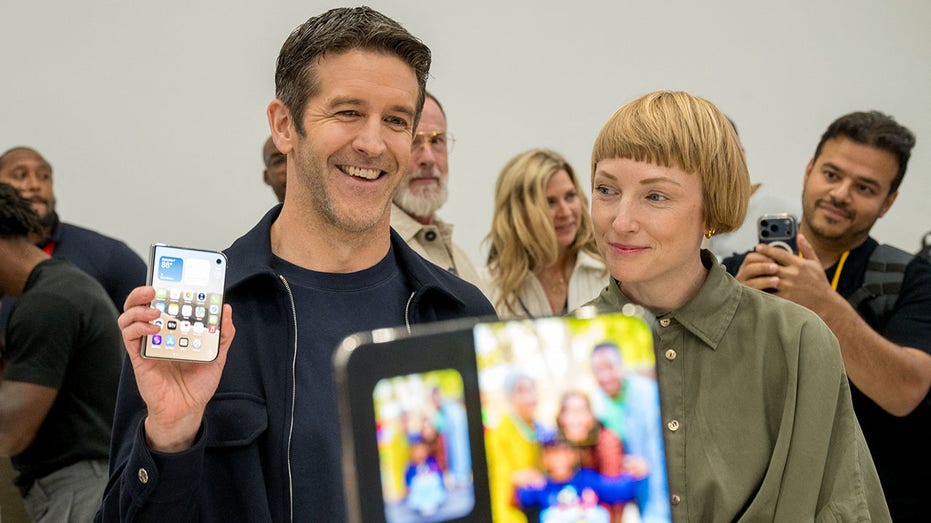
Apple CEO John Ternus and Apple’s vice president of industrial design, Molly Anderson, show off the new iPhone Duo during an Apple event at the Steve Jobs Theater in Apple Park in Cupertino, California, on Sept. 9, 2026. (Karl Mondon / AFP via Getty Images)
Leander Kahney, editor and publisher of Cult of Mac, spoke with FOX Business following Apple’s event and said that Ternus does a “very good job of putting a human face on the big corporation that is Apple.”
“He talked a lot about the team, about the people behind the products and what a privilege it was to be able to lead the team, and he thanked them at the end,” Kahney said. “I think that’s something Steve Jobs used to do, and it’s a good continuation of that, to acknowledge that he’s not just the one guy – that he might be the face of Apple, but it’s definitely a big team of people behind him.”
Here’s a look at some of the key topics discussed during Apple’s event.
APPLE ENTERS A NEW ERA AS JOHN TERNUS TAKES OVER AS CEO
iPhone Duo
The new iPhone Duo, which is foldable and offers the largest ever iPhone display, will come with a starting price of $1,999. Duo’s 7.6-inch display is 50% larger than the iPhone 18 Pro Max, and when opened is also the thinnest iPhone. It comes with storage options from 256 GB to 2 TB and serves as Apple’s entry into the foldables market that has been dominated by Android devices.
The Duo’s folding system is made of more than 100 small precision components, and Apple said that it used AI algorithms during manufacturing to match each hinge with its best-fit housing to ensure perfect alignment.
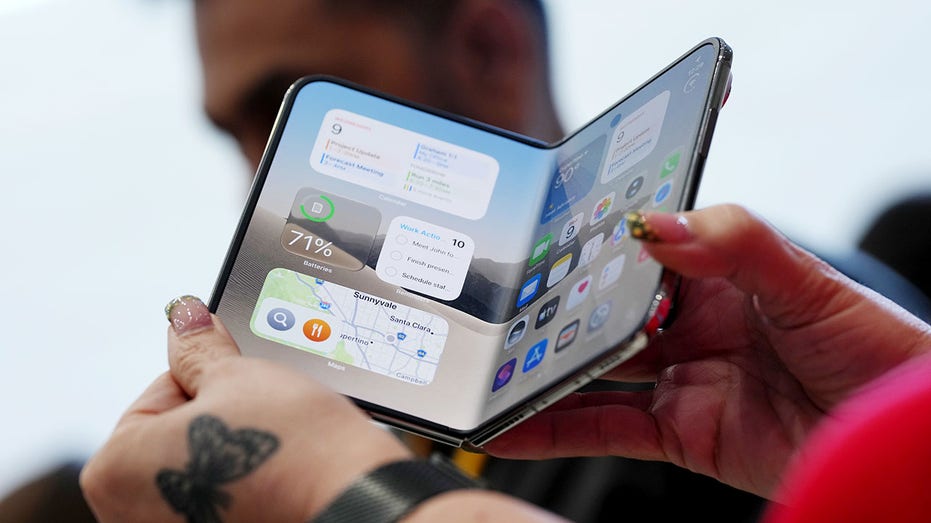
The iPhone Duo is Apple’s first foldable smartphone. (David Paul Morris/Bloomberg via Getty Images)
“I think it’s going to be really popular,” Kahney said. “It combines portability with the big screen. Performance seems to be fantastic. It looks like it’s a really good phone for gaming and for productivity, of course, for working on the go. The cameras look pretty good – they’re obviously not the best cameras, but they look plenty good enough for all those everyday uses.”
Kahney added that the selfie feature was a “very clever” use case, as it allows users to not have to rely on a camera when setting up a group picture and will instead wait until people are in the picture and begin taking pictures automatically.
The Duo will be available starting on Oct. 23, with pre-orders opening a week earlier at 5 a.m. PT on Oct. 16.
APPLE POSTS RECORD JUNE QUARTER AS IPHONE SALES SURGE; COOKS WEIGHS IN ON AI, CHINA
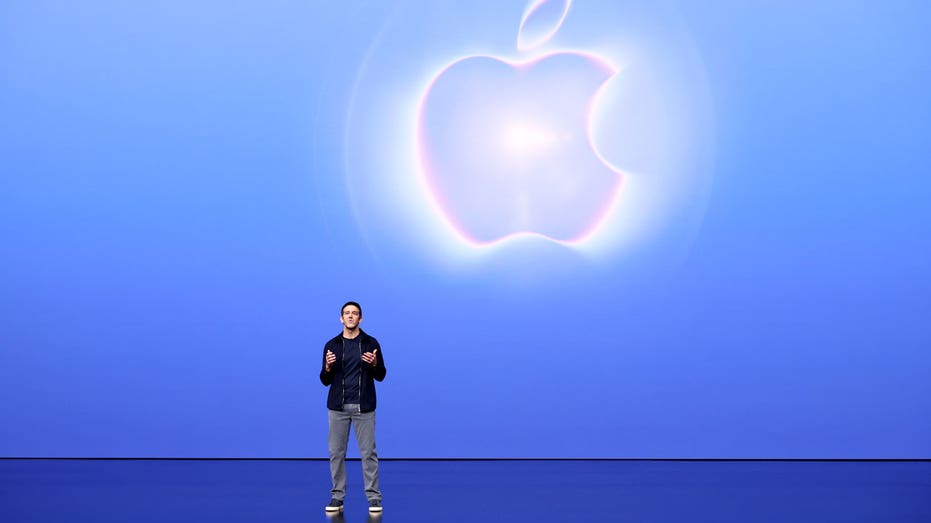
Apple CEO John Ternus speaks during the keynote address at Apple’s “Surprise and Shine” event at the company’s corporate headquarters, Apple Park, on Sept. 9, 2026 in Cupertino, California. (Benjamin Fanjoy/Getty Images)
Apple ecosystem
“The key thing with Ternus was talking about the Apple ecosystem,” Kahney said. “Being a product guy, he’s worked on all of these different things – the Apple Watch, the iPad, the iPhone. And this is Apple’s strength, I think, having an ecosystem of products that complement each other and work well together.”
“They had new phones, new AirPods, new Apple Watches – all of them powered by AI,” Kahney said. “AI, of course, is going to have a massive impact on the kind of experiences and the kind of things you can do with watches, with tech products, and they seem to be well-integrated.”
Apple unveiled AirPods 5, which have “industry leading” active noise cancellation, improved sound quality, hands-free Siri AI and live translation, the company said. The devices start at $129.
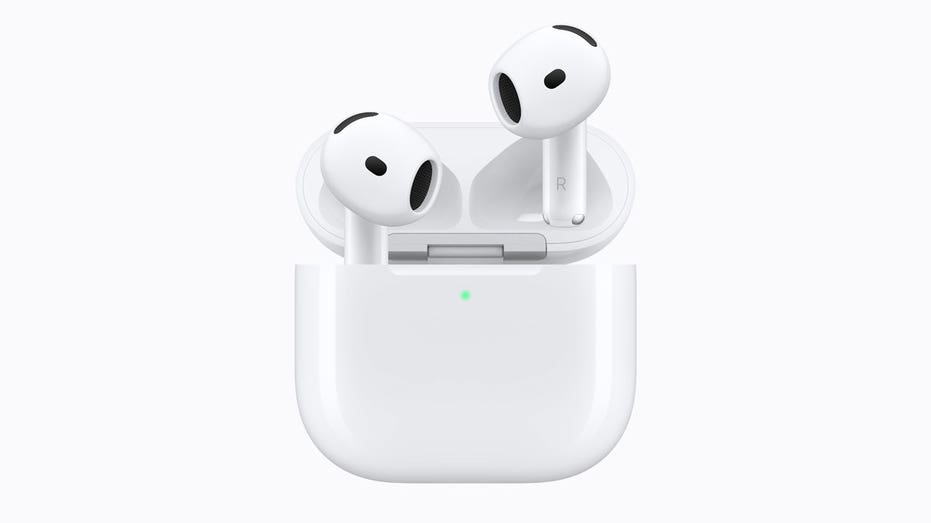
Apple unveiled the AirPod 5 Hero on Sept. 9, 2026. (Apple Inc.)
The Apple Watch Series 12 boasts an updated health sensing system, including higher-frequency heart rate and heart rate variability measurements. Those updates pair with a redesigned Health app to track users’ workouts, sleep, heart rate and more. The Apple Watch Series 12 starts at $399.
TIM COOK’S LAST DAY AS APPLE CEO: HOW HE LED THE TECH GIANT’S RISE TO $4T
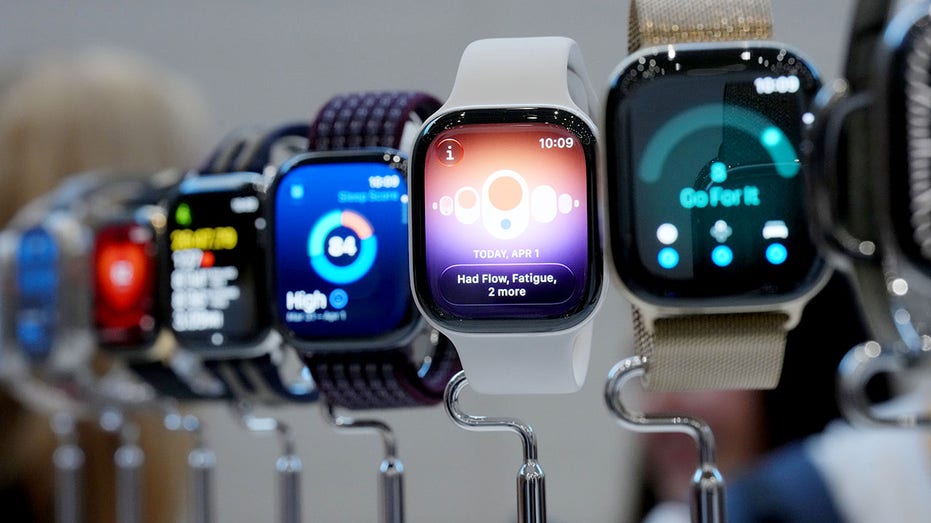
The Apple Watch Series 12 offers new AI features. (David Paul Morris/Bloomberg via Getty Images)
Artificial intelligence
AI features were a notable focus in the latest products Apple rolled out at the event, and Ternus himself said that if you were designing a new product from scratch that would serve as an AI-powered personal hub, it would look a lot like the iPhone.
“There’s no product in the world better designed to be your intelligent personal hub than iPhone,” Ternus said. “As your personal hub, your iPhone can do so much more for you because it understands your context. This includes your calendar, your relationships, your routines, the most private details of your daily life.”
Ternus said that Apple Intelligence runs on devices whenever it can to protect users’ data, calling it “personal intelligence that’s actually personal,” and outlined how AI is making the company’s products more capable.
“From Siri becoming more capable and more personal across your Apple products, to meaningful health insights with Apple Watch, to powerful new AirPods, features like live translation, and so much more,” Ternus said.
Ticker Security Last Change Change % AAPL APPLE INC. 325.28 +9.94 +3.15% GET FOX BUSINESS ON THE GO BY CLICKING HERE
Kahney noted the Apple Watch’s live rewind tool, which can provide subtitles for conversations and summarize important discussions for reference.
“It’s very smart for Apple to take an Apple Watch, which a lot of people wear these days, and layer in those kinds of AI features without coming up with a whole new product,” Kahney said.
-
Ex-Anthropic Researcher’s Post Turbocharges Calls For Action
A former Anthropic researcher’s warning about AI’s potential to cause human extinction turbocharged concerns around the potency of the technology and the absence of guardrails around it, as the company revealed a newly discovered hacking incident.
Just a day after Jacob Coxon publicly warned that “the people building AI earnestly believe that it could kill us all by the end of the decade” in a now-viral post on X, Anthropic on Wednesday disclosed another hacking incident involving an early version of Claude Opus 4.6. The company said it detected it just last month after having missed it during an earlier review. Anthropic said it had notified affected parties but did not share further details.
In related news, Reuters revealed that OpenAI agents found a way around their own restrictions and used over 10 websites for unauthorized communications. The company kept the incident under wraps for months, the news agency pointed out.
The latest disclosures, which follow a number of earlier alarming incidents reported over the summer, will inevitably fuel already existing concerns that humans are losing control of AI.
This has added more urgency to AI giants’ calls for regulation.
Chris Lehane, the chief global affairs officer of OpenAI, said the rapid advancement of AI’s capabilities means national safety standards are required.
But Lehane added that “any such standards must ultimately also extend beyond national borders.”
“Models, research, and technical expertise move globally, and failures involving the most capable systems could have consequences far beyond the country in which they are developed,” Lehane wrote in a blog post. “The United States needs to establish credible standards at home if it is going to lead internationally — and we are increasingly convinced that compatible international standards will be necessary.”
A spokesperson for Anthropic struck a similar tone in a statement shared with multiple outlets Wednesday, calling for the adoption of a “lawful, verifiable way to work together to pace how we release powerful models.”
In an interview with CNN’s Anderson Cooper, Coxon assessed that AI giants’ desperate plea for regulation is “completely honest” and “genuine.”
“They find themselves in this scenario where they’re compelled to race toward building a deadly technology and they would love for some sort of international body to allow them to approach it at a reasonable pace,” he said, while adding that the fears of being outpaced by competitors is forcing them to keep going.
Coxon shared a similar sentiment in a parting message to colleagues on Slack, according to NBC News.
“Like many of you I think that without international coordination we will incur a risk of causing human extinction,” the 27-year-old researcher wrote. “I’ve recently become more concerned about the degree and imminence of this risk.”
“But I would like to emphasize that from my perspective you are all exactly the people I would like to be calling the shots — it’s the structural pressure from a race that will make this a scary gamble,” Coxon continued in his note to colleagues, per NBC.
Congress appears unprepared to confront the scale of the challenge, with lawmakers scrambling to take action and progressives mostly leading the charge.
But the attention these latest warnings have garnered from industry insiders could begin to change that.
The GOP-led Senate Committee on Homeland Security’s Subcommittee on Disaster Management on Thursday announced it is probing OpenAI’s Hugging Face incident, when one of the company’s AI agents broke into the tech firm.
“Your own chief scientist wrote just days ago that ‘no lab has solved alignment and monitoring to a sufficient degree to continue responsibly scaling at maximum speed for much longer.’ And there are immediate questions about the consequences of these hacks from rogue AI agents,” Sen. Josh Hawley (R-Mo.) wrote to OpenAI CEO Sam Altman. “This investigation will seek those answers.”
-
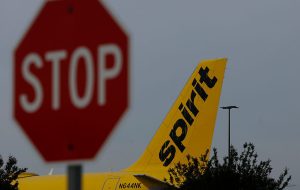
Panic builds over bankrupt Spirit’s looming data sale to Google
Late Google rival vows to resolve objections
Last week, an AI training data lab, Micro1, put in a last-minute competing bid that it claims resolves all objections to the data sale. Outbidding Google by 25 percent, Micro1 offered $12.5 million in cash, while promising that if debtors pick Micro1 over Google, the bankruptcy proceedings can avoid any further delays.
However, Micro1’s plan notably includes de-identifying the data in-house, which Spirit debtors were opposed to in the auction process. Spirit even chose a lower second bid should the Google sale fall through because the de-identification was completed by independent third parties. It seems, then, that even if the late bid is considered, it’s less likely to tempt debtors. Additionally, Micro1’s claims to resolve all objections may be somewhat exaggerated. In Springshot’s case, Micro1 does not promise to segregate IP, trade secrets, or proprietary data. Instead, Micro1 only says that it will not use Springshot data to create a rival product or ever sell the data to a would-be rival.
Ars could not reach Micro1’s lawyers for comment, but the data lab said it plans to attend the upcoming hearing to entice debtors to take their offer.
Kreuzkamp told Ars that he appreciates that Micro1 acknowledges Springshot’s concerns, but his objective remains scrubbing Spirit’s dataset of any data that Springshot owns.
His company’s lawyers have been in contact with Spirit debtors’ legal team and plan to defend Springshot’s proprietary data at the upcoming hearing. They feel confident the court will take their concerns seriously. But there are no guarantees, as the bankruptcy court prepares to approve this unusual sale. Kreuzkamp said it remains unclear what process a bankrupt company like Spirit should be taking to “ensure that it extricates everything that is proprietary from a dataset.”
“I just think it’s a very complex issue when it comes to extricating the data that’s owned by somebody else,” Kreuzkamp said. However, now’s the time to do it, he suggested, since “once you throw data into an AI model, it’s impossible to trace what the model did with that.”